 WEARLETS
Fabric Guides · Woven Fabrics
What Is Twill Fabric?
Weave, Types, Uses and Benefits.
Twill is the diagonal-ribbed weave behind jeans, chinos, gabardine coats and countless uniforms. This guide explains how twill fabric is made, the types worth knowing, and how to choose the right one for a clothing line.
- Weave familyOne of three basic weaves
- SignatureDiagonal rib, or wale
- Common fibresCotton, wool, polyester, silk
- Best-known twillsDenim, chino, gabardine
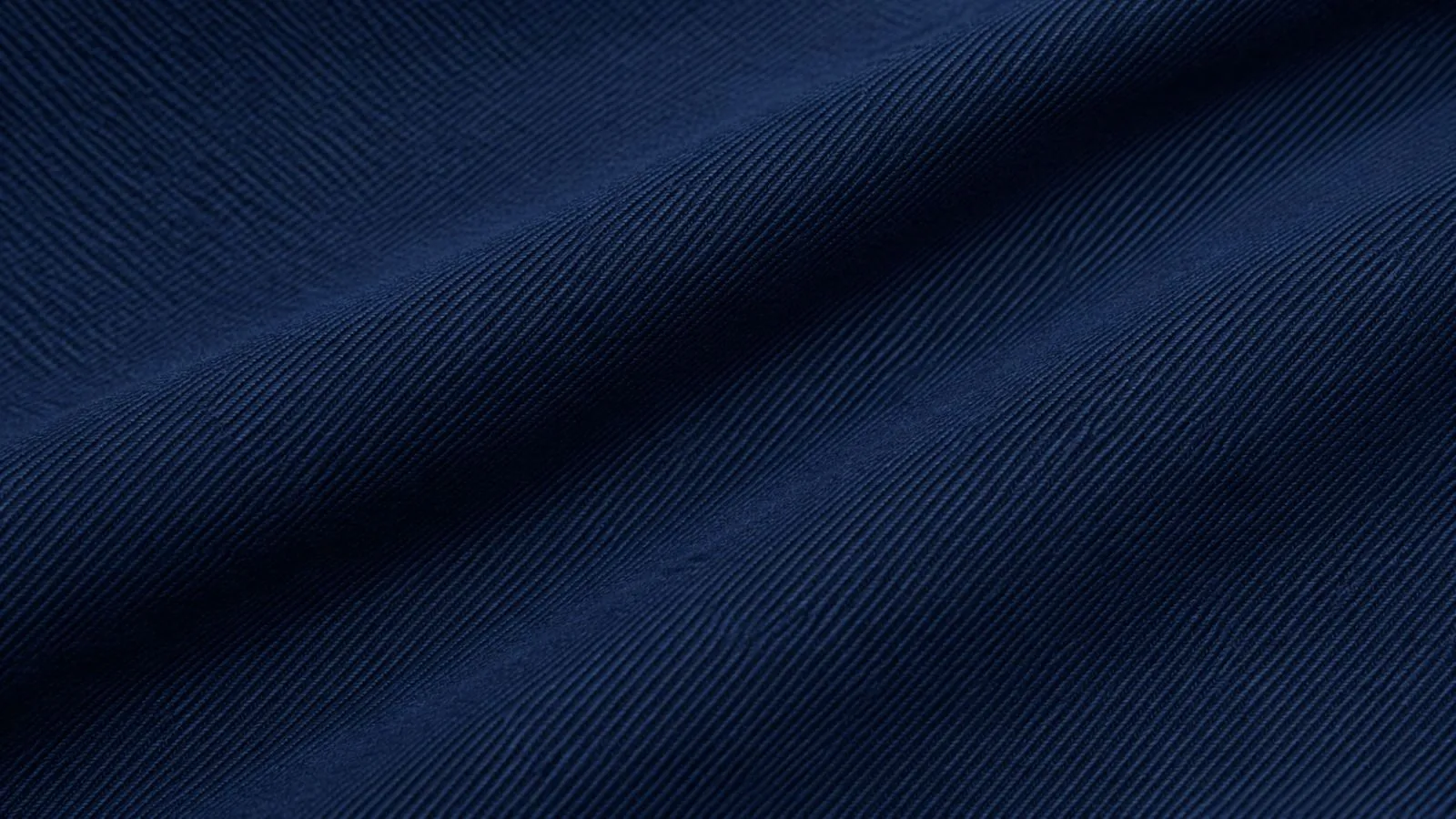
Twill is not a fibre. It is a way of weaving, and that single distinction explains almost everything about it.
Look closely at a pair of jeans or chinos and you will notice fine lines running diagonally across the cloth. Those lines are the mark of twill, one of the oldest and most widely used fabric constructions in the world. Because of its strength, drape and easy-care nature, twill fabric appears in everything from workwear and school uniforms to tailored suits and silk scarves.
However, the word is often misunderstood. Shoppers ask whether twill material is cotton, whether it is thicker than other fabrics, and how it differs from poplin or denim. Meanwhile, clothing brands need to know which weight, fibre and finish will suit a particular garment. This guide answers those questions in plain language, drawing on practical experience from garment production at Wearlets.
01
What Is Twill?
Twill is a woven fabric construction in which the yarns interlace in a stepped sequence, creating parallel diagonal ribs on the surface of the cloth. Those ribs are called wales. Along with plain weave and satin, twill is classified by Encyclopaedia Britannica as one of the three basic textile weaves.
Importantly, twill describes structure, not content. A twill cloth can be woven from cotton, wool, polyester, silk, linen or any blend of them. Therefore, “cotton twill” and “polyester twill” are both correct terms, and each behaves differently even though the weave is the same.
The name is generally linked to the idea of “two”, a reference to the weft passing over or under two or more warp threads at a time. In older texts you may also see the phrase twilled cloth, which simply means any fabric woven this way. Today, twill fabrics account for many of the most familiar garments in a wardrobe, including jeans, chinos, trench coats and work trousers.
02
How Is Twill Fabric Made?
Like all woven textiles, twill is produced on a loom by interlacing lengthwise warp yarns with crosswise weft yarns. What sets it apart is the order in which the warp yarns are lifted. A twill needs at least three harnesses, whereas a plain weave needs only two.
- Yarn preparation. Fibre is spun into yarn, then the warp yarns are wound onto a beam and coated with size so that they withstand the tension and friction of weaving.
- Drawing-in. Each warp end is threaded through a harness in a set order. This threading plan determines the twill ratio and the direction of the diagonal.
- Weaving. The loom raises a different group of warp yarns for every pass of the weft. Because each pass is offset by one thread, the interlacing points climb diagonally.
- Preparation of the grey cloth. Next, the loom-state fabric is singed, desized, scoured and, where required, bleached or mercerized to improve lustre and dye uptake.
- Dyeing. Most twills are piece dyed to a solid colour. Others, such as denim, are woven from yarn that has already been dyed.
- Finishing. Finally, the cloth may be pre-shrunk, brushed, peached, enzyme washed or given a water-repellent or wrinkle-resistant finish before inspection.
03
Understanding the Twill Weave Structure
A twill weave is written as a fraction. The first number shows how many weft yarns a warp yarn passes over, and the second shows how many it passes under. In a 2/1 twill, for example, each warp floats over two wefts and under one. In addition, every neighbouring warp starts that sequence one step higher, which is what produces the diagonal twill pattern.
Warp yarn on the surfaceWeft yarn on the surface
Warp-faced, weft-faced and even-sided twills
When more warp than weft shows on the face, as in 2/1 and 3/1 constructions, the twill is warp-faced. Denim, chino, drill and gabardine belong to this group. Conversely, a weft-faced twill shows more weft. An even-sided twill such as 2/2 displays both yarn sets equally, so the diagonal is visible on both sides. Serge, herringbone and houndstooth are typical examples.
Right-hand and left-hand twill
The diagonal can run in either direction. A right-hand twill, also called a Z-twill, rises from lower left to upper right and is the most common form. A left-hand twill, or S-twill, rises the opposite way and often feels slightly softer after washing. Furthermore, the angle can be varied: a 45-degree line is regular, while steeper lines are found in gabardine and cavalry twill.
Why the structure matters
Because twill yarns interlace less often than those in a plain weave, they can sit closer together. As a result, the fabric becomes denser, heavier and more pliable at the same time. The longer yarn floats also give twill its characteristic smoothness and its distinct face and back.
04
Characteristics of Twill Fabric
Although fibre and finish change how a twill cloth feels, the weave itself gives every twill a shared set of properties.
Visible diagonal rib
The wale may be bold, as in cavalry twill, or barely visible, as in fine shirting. Either way, it catches the light and adds depth to solid colours.
Distinct face and back
Most twills have a technical face with a pronounced rib and a flatter reverse. Denim shows this clearly: blue outside, pale inside.
High density and strength
Closely packed yarns give twill good tear strength and abrasion resistance, which is why it dominates workwear and uniforms.
Soft, fluid drape
Fewer interlacings allow the yarns to move, so twill hangs and bends more easily than a plain weave of equal weight.
Good crease recovery
Twill wrinkles less and recovers faster than poplin or broadcloth. Consequently, garments look neat for longer between pressings.
Soil-hiding texture
The uneven, ribbed surface disguises light marks and dust far better than a flat fabric, an advantage for everyday trousers and outerwear.
05
Main Types of Twill Fabric
Many fabrics sold under their own names are, in fact, twills. They differ in fibre, yarn size, weave ratio and finish. The table below summarises the types that clothing brands encounter most often; a fuller list of warp-faced and even-sided twills is also available for reference.
| Type | Construction | Typical fibre | Common uses |
|---|---|---|---|
| Denim | Warp-faced twill with dyed warp and undyed weft | Cotton, cotton-stretch | Jeans, jackets, overalls |
| Chino | Fine, steep warp-faced twill, piece dyed | Cotton, cotton blends | Trousers, shorts, uniforms |
| Drill | Strong, dense warp-faced twill | Cotton | Workwear, uniforms, pocketing |
| Gabardine | Tightly woven steep twill with a smooth face | Wool, cotton, polyester | Trench coats, suits, trousers |
| Serge | Even-sided 2/2 twill | Wool, wool blends | Suits, uniforms, coats |
| Cavalry twill | Steep twill with a bold double rib | Wool, cotton | Trousers, riding wear, outerwear |
| Herringbone | Diagonal reverses to form a V pattern | Wool, cotton | Jackets, coats, workwear |
| Houndstooth | Even-sided twill in two contrasting colours | Wool | Suits, skirts, coats |
| Foulard / surah | Light, soft even-sided twill | Silk, polyester | Scarves, ties, linings |
Gabardine deserves a special mention. This water-resistant twill fabric was pioneered by Thomas Burberry in the late nineteenth century, and its tight weave still makes it the classic cloth for the cotton twill trench coat. Similarly, chino began as a summer-weight military cloth before it became a wardrobe staple, as noted in this reference entry on basic twill weaves.
06
Cotton Twill Fabric Explained
So, what is cotton twill? Simply put, it is cotton yarn woven in a twill structure. Cotton twill fabric is by far the most widely used member of the family, because it pairs the comfort, absorbency and breathability of cotton with the durability and drape of the diagonal weave.
As a cotton twill textile, it also takes dye evenly, softens with washing and accepts finishes such as brushing, peaching and garment dyeing. Moreover, a small percentage of elastane can be added to create stretch twill for slimmer fits.
Typical cotton twill weights
Weight is usually stated in grams per square metre (GSM) or ounces per square yard. The ranges below are approximate, since mills and markets classify weights slightly differently.
| Weight class | Approx. GSM | Best suited to |
|---|---|---|
| Lightweight | Roughly 120–180 | Cotton twill shirts, dresses, linings, summer shorts |
| Midweight | Roughly 180–270 | Chinos, cotton twill pants, overshirts, skirts, caps |
| Heavyweight | Roughly 270 and above | Work trousers, cotton twill jackets, denim, bags |
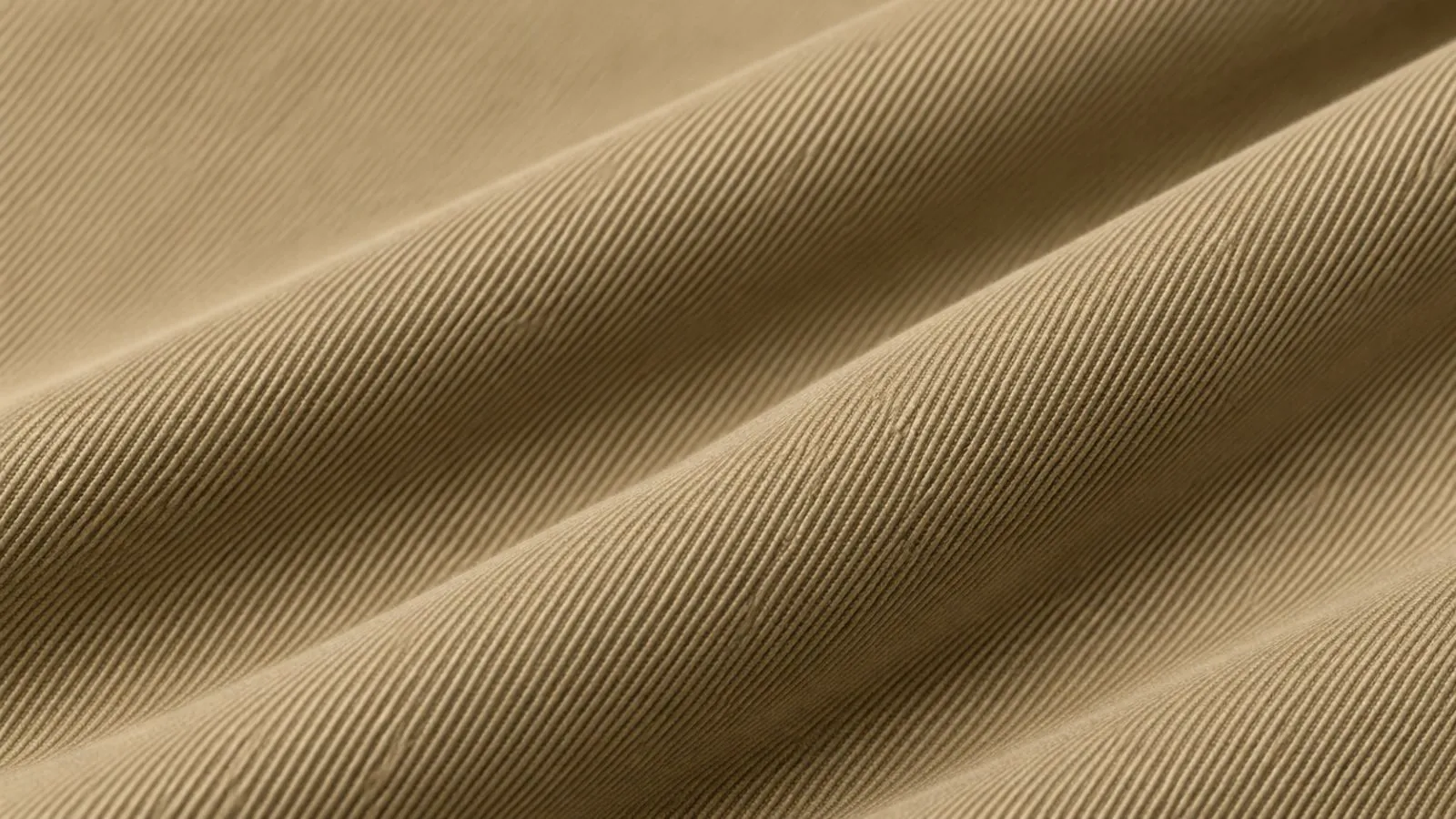
In practice, a cotton fabric twill in the midweight range is the safest starting point for most casual bottoms. Lighter cloths suit shirting, whereas heavier constructions are better for outerwear and hard-wearing uniforms.
07
Other Materials Used in Twill Fabric
Beyond cotton, the twill weave is applied to almost every apparel fibre. Each one changes the weight, lustre, performance and price of the finished cloth.
Polyester twill fabric
Polyester twill, often shortened to poly twill, is strong, colourfast and quick drying. It resists shrinking and creasing, and it is well suited to sublimation printing. Consequently, it is common in uniforms, linings, bags and team apparel. Polyester-cotton blends offer a balance of comfort and easy care.
Silk twill
Silk twill is light, lustrous and fluid, with a fine diagonal texture that holds printed colour exceptionally well. For that reason, it is the traditional choice for luxury scarves, neckties and blouses.
Linen twill
Linen twill is less common than plain-weave linen. Nevertheless, the twill structure softens linen’s crisp hand and improves its drape, producing a breathable cloth for summer tailoring, trousers and relaxed jackets.
Wool twill
Wool is the foundation of tailoring twills such as serge, gabardine, cavalry twill and many tweeds. These fabrics are warm, resilient and naturally crease resistant, so they remain the standard for a twill suit, blazer or overcoat.
Tackle twill fabric
Tackle twill is a sturdy polyester or nylon twill made for decoration rather than for whole garments. It is cut into letters, numbers and logos, then stitched onto the garment with a zigzag or satin border. The result is the raised, layered lettering seen on sports jerseys, varsity jackets and hoodies.
08
Different Twill Weave Patterns
By changing the direction, angle or continuity of the diagonal, weavers create a wide range of twill weave pattern variations from the same basic principle.
Regular twill
The diagonal runs continuously in one direction at roughly 45 degrees. Most chinos, drills and shirting twills fall into this category.
Herringbone twill weave
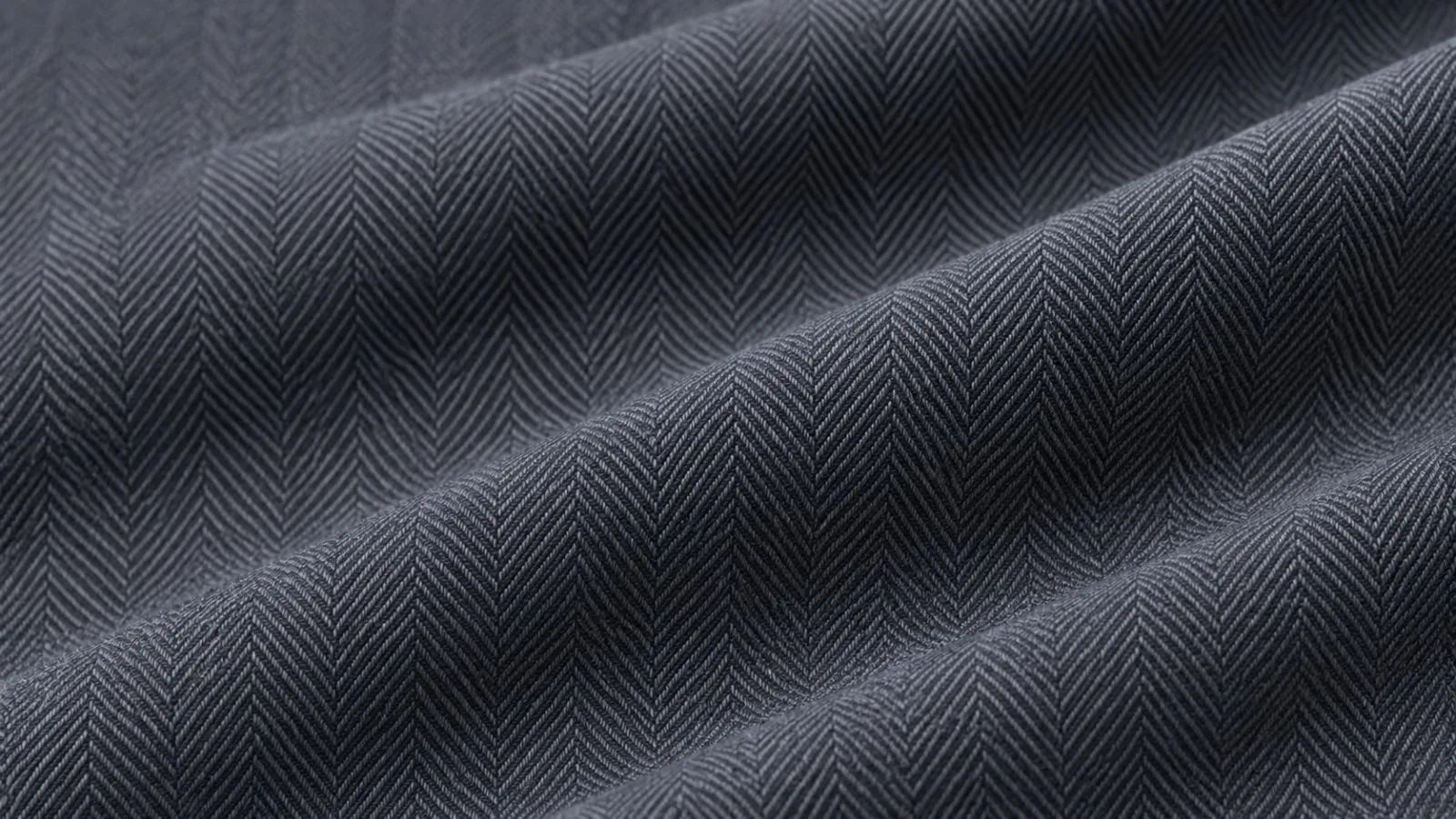
In herringbone twill, the diagonal reverses at regular intervals to form columns of V shapes that resemble a fish skeleton. The pattern is traditionally woven in wool for suiting and coats. In addition, cotton herringbone twill has a long history in utility clothing and military workwear, and it is also woven as a narrow twill tape for binding and reinforcement.
Broken twill
Here the diagonal is interrupted and shifted without forming a clean point. Broken twill is used in some denims, largely because it reduces the leg twist that regular twills can develop after washing.
Pointed and diamond twill
Reversing the line horizontally creates a zigzag, or pointed twill. Reversing it both horizontally and vertically produces diamond shapes, which are popular in decorative and heritage fabrics.
Steep and reclining twills
Finally, the angle itself can be altered. Steep twills, with a line above 45 degrees, include gabardine and cavalry twill. Reclining twills have a flatter line and are used mainly for linings and specialty cloths.
09
Common Uses of Twill Fabric
Twill is one of the most versatile woven fabrics available. Although it is used in upholstery, bags and home textiles, apparel remains its largest application.
Twill trousers and pants
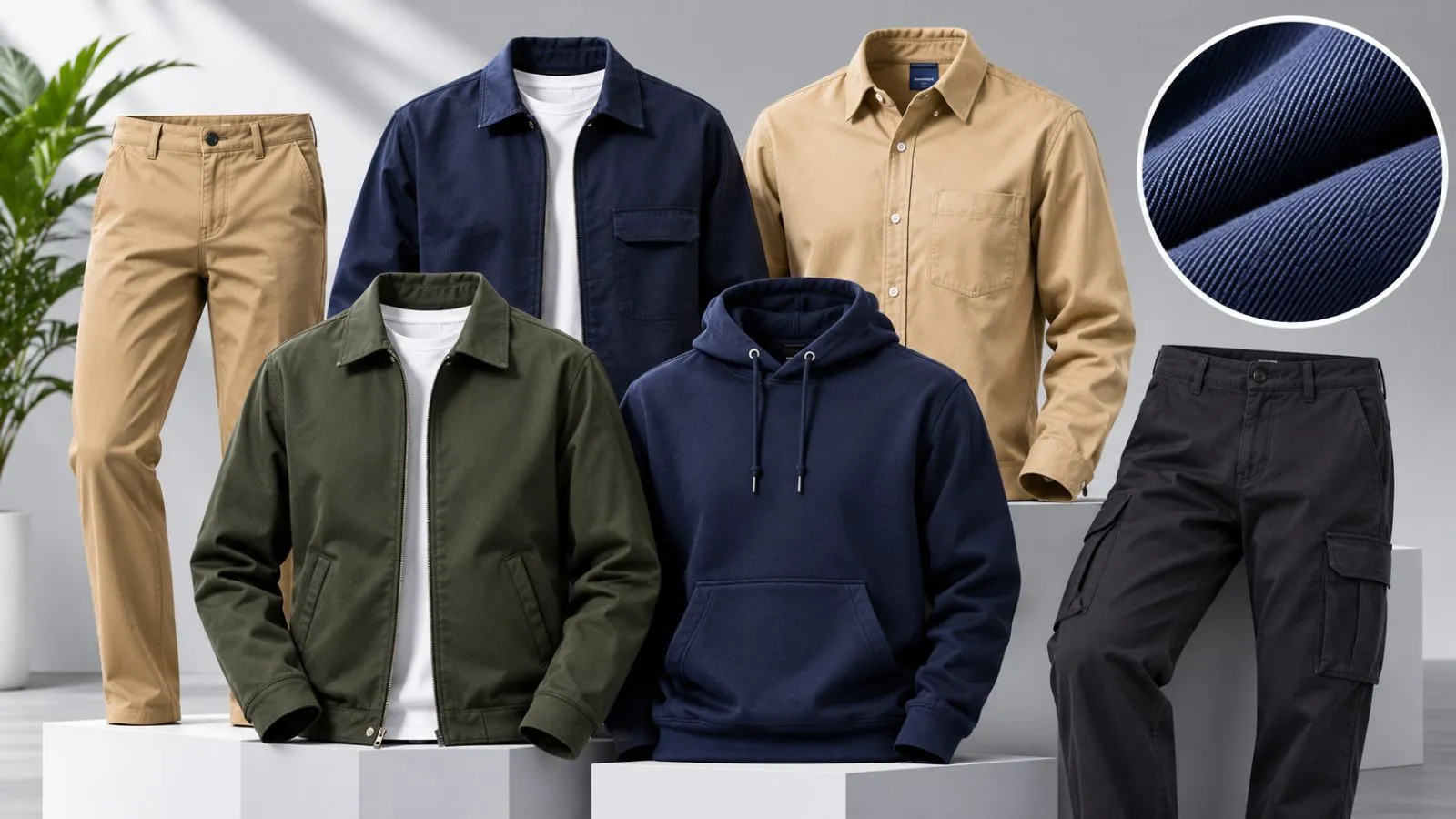
What are twill pants? They are simply trousers cut from twill cloth, most often cotton. Chinos, khakis, cargo pants and work trousers are all twill trousers, valued because the fabric drapes cleanly, resists creasing and survives daily wear.
Twill shirts
A twill shirt is slightly heavier and softer than a poplin one, with a subtle sheen. A cotton twill shirt therefore works well as a dress shirt for cooler months, an overshirt or a sturdy work shirt.
Twill jackets, blazers and suits
From the casual cotton twill jacket and bomber to the wool twill blazer, the weave provides structure without stiffness. Likewise, a twill suit in serge or gabardine holds a sharp line and travels well.
Twill shorts and joggers
Lighter cotton and stretch twills are cut into twill shorts and twill joggers. These offer a neater, more tailored look than jersey or fleece while remaining comfortable.
Uniforms, workwear and headwear
School, corporate and industrial uniforms rely heavily on cotton and polyester-cotton twill. In addition, the classic baseball cap and bucket hat are usually made from cotton twill.
Beyond clothing
The same weave is used for upholstery, luggage and bedding. It even appears in engineering: twill-weave carbon fibre is chosen for composite parts because it conforms to curved surfaces more easily than a plain weave.
10
Twill Fabric in Clothing Manufacturing
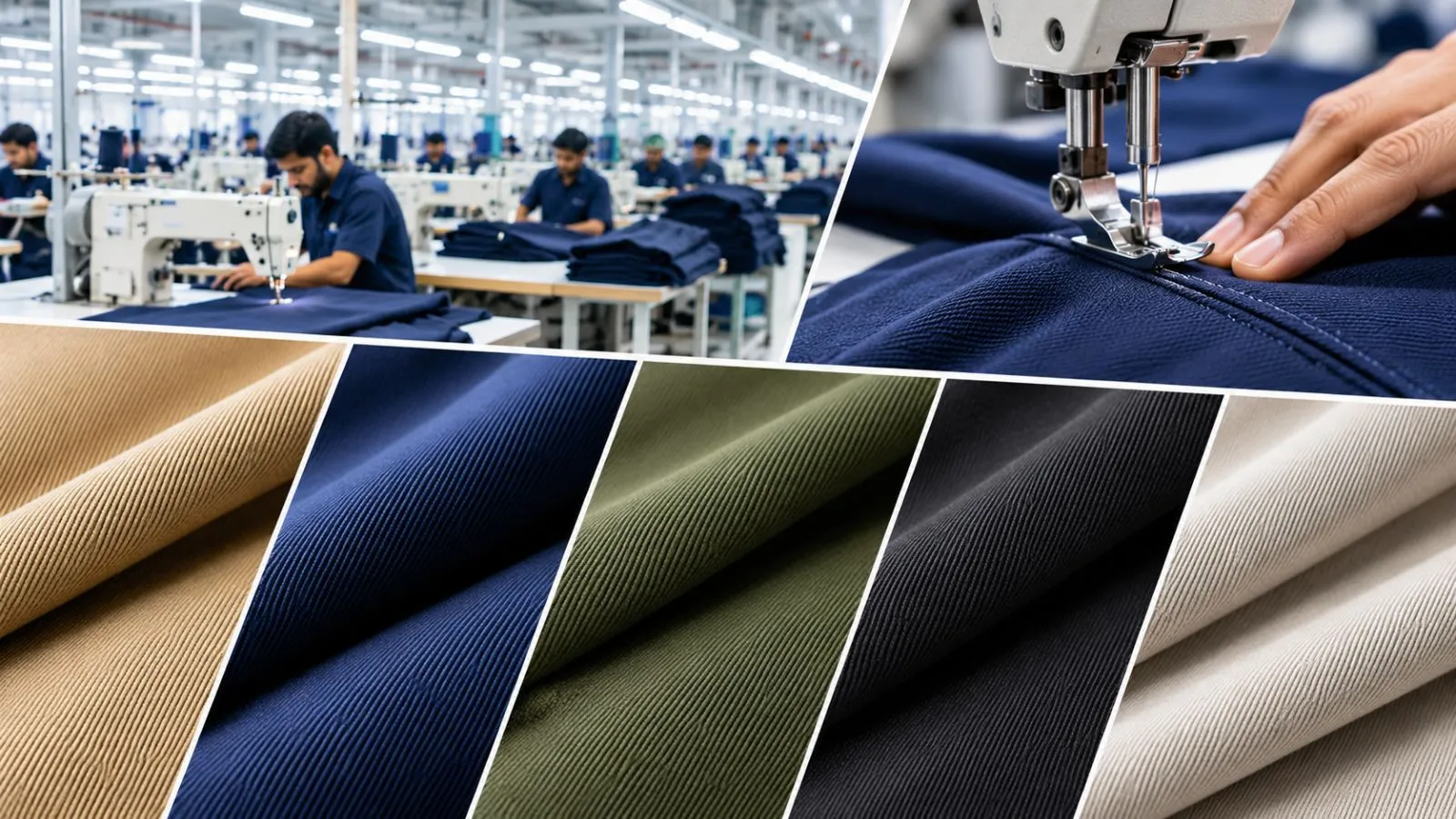
On the production floor, twill is regarded as a cooperative fabric. It is stable under the cutting knife, feeds smoothly through sewing machines and presses well. Even so, a few points need attention to achieve a consistent result, and they form part of any well-run custom clothing manufacturing service.
- One-way cutting. Because twill has a directional surface, pattern pieces are normally laid in the same direction. Otherwise, panels may reflect light differently and appear mismatched in shade.
- Face and back control. The face and reverse look different, so every ply must be spread the correct way up.
- Seam construction. Flat-felled and double-needle seams are common on bottom-weight twill, as they add strength and a clean finish.
- Shrinkage planning. Cotton twill should be pre-shrunk, or patterns must include a tested shrinkage allowance, especially for garment-washed styles.
- Decoration. The firm surface supports embroidery, woven labels and patches very well. Screen printing also performs reliably on smoother twills.
Twill also plays an important role in sportswear decoration. At Wearlets, a clothing manufacturer established in Sialkot, Pakistan, in 2004, tackle twill lettering is a frequent request for sports jerseys, team uniforms and custom hoodies, where sewn-on twill letters deliver a premium, long-lasting finish. Brands building a complete range often pair woven twill bottoms with knitted pieces such as custom T-shirts and custom polo shirts.
Similarly, woven twill joggers offer a smarter alternative to the fleece and knit fabrics typically used in custom tracksuit manufacturing, giving a collection more variety without changing its overall fit block.
11
Advantages of Twill Fabric
- Durability. The dense construction withstands abrasion and repeated laundering, which extends garment life.
- Drape and comfort. Twill moves with the body and softens further over time.
- Crease resistance. Garments need less ironing and look presentable throughout the day.
- Opacity. Because the yarns are closely packed, twill is rarely see-through, even in light colours.
- Practical appearance. The textured surface hides minor stains and wear.
- Versatility. It is available in nearly every fibre, weight, colour and finish, from silk scarves to heavy workwear.
- Decoration friendly. Embroidery, patches and appliqué sit securely on its stable surface.
12
Disadvantages of Twill Fabric
No fabric is perfect for every purpose. Therefore, it is worth weighing the following limitations before specifying twill.
- Less airy than plain weave. Dense, heavier twills feel warmer in hot, humid climates than poplin or lawn.
- Higher fabric cost. More yarn per square metre generally means a higher price than a comparable plain weave.
- Surface wear. The raised wale takes the most abrasion. Over time it can become shiny on wool or fade on denim.
- Skew and twist. The diagonal structure can cause seams to twist after washing if the fabric is not properly finished.
- Directional cutting. One-way layouts can increase fabric consumption slightly.
- Longer drying time. Heavy cotton twill holds more water and dries more slowly than lightweight cloth.
13
Twill vs Poplin: What Is the Difference?
The poplin vs twill question comes up most often when choosing shirting. Both are frequently made from cotton; however, they are woven differently. Poplin is a plain weave with fine warp yarns and slightly heavier weft yarns, which gives a smooth, crisp surface. Twill, by contrast, has a diagonal texture and a softer hand.
| Feature | Twill | Poplin |
|---|---|---|
| Weave | Twill weave with diagonal ribs | Plain weave with a fine crosswise rib |
| Surface | Textured, with a subtle sheen | Smooth, flat and crisp |
| Weight | Usually medium to heavy | Usually light |
| Drape | Soft and fluid | Crisp and structured |
| Wrinkling | Resists creases well | Creases more easily |
| Breathability | Good, but warmer | Very good; cool to wear |
| Typical use | Trousers, jackets, cool-weather shirts | Formal shirts, blouses, summer dresses |
In short, choose poplin for crisp, cool, formal shirts. Choose twill when you want more substance, a softer drape and fewer wrinkles.
14
Twill vs Denim
Strictly speaking, this is not a contest between two different fabrics, because denim is a warp-faced cotton twill. All denim is twill, but not all twill is denim. In everyday use, though, “twill” usually refers to piece-dyed cloths such as chino, while “denim” refers to the yarn-dyed fabric used for jeans.
| Feature | Cotton twill (chino type) | Denim |
|---|---|---|
| Dyeing | Piece dyed after weaving; same colour on both sides | Dyed warp and undyed weft; lighter on the reverse |
| Weave | Often 2/1 or 3/1 with finer yarns | Typically 3/1 with coarser yarns |
| Weight | Light to medium | Medium to heavy |
| Feel | Smooth and soft | Firm and rugged; softens with wear |
| Ageing | Colour stays relatively even | Fades with characteristic contrast |
| Typical use | Chinos, uniforms, shirts, jackets | Jeans, trucker jackets, workwear |
Twill is also related to other ribbed fabrics. For instance, the ground cloth beneath the pile of corduroy is often woven as a twill, which adds to its strength.
15
How to Identify Quality Twill Fabric
Two rolls of twill cloth can look alike on a swatch card yet perform very differently in a finished garment. Accordingly, check the following points before approving a fabric.
- Clean, even wale. The diagonal lines should be sharp, parallel and uniform across the full width, with no broken or wandering ribs.
- Compact weave. Hold the fabric up to the light. A quality twill shows very little light between yarns and feels firm, not papery.
- Yarn quality. Combed or ring-spun cotton yarns give a smoother surface, better strength and less pilling than coarse, uneven yarns.
- Consistent weight. Confirm the GSM against the specification and compare several points along the roll.
- Colour fastness. Rub a white cloth firmly over the surface, both dry and damp. Minimal colour transfer is a good sign.
- Shrinkage and skew. Wash a measured square, then re-measure it. Low shrinkage and square corners indicate proper finishing.
- Hand feel and recovery. Crush the fabric in your fist for a few seconds. Good twill springs back with only faint creasing.
16
How to Care for Twill Fabric
Twill is easy to look after. Nevertheless, the right routine preserves colour and shape for much longer. Always follow the garment’s care label first, since fibre content determines the method.
- Wash inside out in cold or warm water with similar colours. This protects the raised wale from abrasion and fading.
- Use a mild detergent and avoid chlorine bleach, which weakens cotton and strips colour.
- Dry gently. Tumble dry on low heat or line dry. High heat is the main cause of shrinkage in cotton twill.
- Iron on the reverse while the garment is slightly damp, using a medium to hot setting for cotton and a low setting for polyester.
- Dry clean wool and silk twill unless the label states otherwise.
- Store properly. Hang trousers and jackets to prevent set-in creases, and fasten zips before washing to avoid snags.
17
Why Clothing Brands Choose Twill Fabric
For a clothing brand, fabric choice affects cost, quality perception and return rates. Twill performs well on all three counts, which explains its lasting popularity with startups and established labels alike.
Reliable wear
Garments keep their shape and colour through repeated washing, so customers stay satisfied for longer.
Broad product range
One fabric family covers trousers, shorts, shirts, jackets, uniforms and caps across several seasons.
Easy to brand
Embroidery, woven patches and tackle twill appliqué all sit cleanly on its stable surface.
Wide colour choice
Piece-dyed twill can be matched to brand colours, and garment dyeing adds a lived-in look.
Premium perception
The weight, drape and subtle sheen of a good twill signal quality the moment a customer handles it.
Year-round sales
Lightweight twills suit summer, while heavier weights carry a collection through autumn and winter.
If you are still comparing options, the Wearlets types of fabric guide explains how twill sits alongside jersey, fleece, piqué and other common apparel fabrics.
18
Frequently Asked Questions
Quick answers to the questions people ask most often about twill fabric.
Twill fabric is any woven cloth made with a twill weave, which produces visible diagonal ribs across the surface. Because the term describes a structure and not a fibre, twill can be made from cotton, wool, polyester, silk, linen or blends. Denim, chino and gabardine are all well-known examples.
The twill weave is one of the three basic textile weaves, alongside plain and satin. Each weft yarn passes over one or more warp yarns and then under two or more, and every new row shifts that sequence one step sideways. As a result, the interlacing points line up into a diagonal ridge called a wale.
Cotton twill fabric is cotton yarn woven in a twill structure. It combines the comfort and breathability of cotton with the strength, drape and crease resistance of the diagonal weave. Chino, drill and denim are the most common cotton twills, and they are widely used for trousers, jackets, shirts, uniforms and caps.
It can be either. Twill names the weave, not the raw material, so the fabric is natural when woven from cotton, wool, silk or linen and synthetic when woven from polyester or nylon. Many commercial twills are blends, such as polyester-cotton for uniforms or cotton with a little elastane for stretch.
Twill is recognised by its diagonal rib, a distinct face and back, and a dense, compact construction. In addition, it drapes well, resists creasing better than plain weaves of similar weight, hides light soiling and holds up to repeated wear. It is usually a little heavier and softer than a comparable plain-weave fabric.
Yes. Twill has fewer interlacing points than plain weave, so more yarns can be packed into each inch of cloth. That high density gives the fabric good tear strength and abrasion resistance, which is why workwear, uniforms, jeans and upholstery so often rely on it. Durability still depends on fibre and yarn quality.
Twill is one of the most practical fabrics for daily wear. It is comfortable, keeps its shape, needs relatively little ironing and tolerates frequent washing. Consequently, everyday staples such as chinos, jeans, overshirts, casual jackets, shorts and work trousers are routinely made from cotton or blended twill.
In a plain weave, each weft yarn alternates over and under single warp yarns, creating a flat, checkerboard-like surface that looks the same on both sides. In twill, yarns float over two or more threads in a stepped sequence, creating diagonal lines. Twill is therefore typically denser, softer, more drapey and more crease resistant.
Poplin is a plain-weave fabric with a smooth, crisp, lightweight surface, whereas twill has a diagonal texture and a slightly heavier, softer hand. Poplin feels cooler and suits formal shirts and warm weather. Twill, on the other hand, drapes better, wrinkles less and is the usual choice for trousers, jackets and sturdier shirts.
The comparison mixes two different things, because cotton is a fibre and twill is a weave. Cotton twill is cotton. However, a cotton twill is generally thicker and heavier than a plain-weave cotton such as poplin or lawn, since the twill structure allows more yarns to be packed closely together.
Cotton twill is breathable because cotton fibre absorbs moisture and lets air pass. Nevertheless, its dense weave makes it slightly less airy than lightweight plain-weave cotton. Lighter cotton twills work well year-round, while heavy bottom-weight twill and denim feel warmer and are better suited to cooler conditions.
Common types include denim, chino, drill, gabardine, serge, cavalry twill, herringbone, houndstooth and foulard. They differ in fibre, yarn size, weave ratio and finish. Twills are also grouped by structure into warp-faced, weft-faced and even-sided, and by fibre into cotton, wool, polyester, silk and linen twill.
Herringbone twill is a variation in which the diagonal line reverses direction at regular intervals. This reversal forms a repeating V-shaped or zigzag pattern that resembles the skeleton of a herring. It is traditionally woven in wool for suits and coats, and in cotton for sturdy utility garments and workwear.
Polyester twill fabric is a twill weave made from polyester yarn, sometimes called poly twill. It is strong, colourfast, quick drying and highly resistant to shrinking and wrinkling. For these reasons it is widely used for uniforms, linings, bags, flags, sublimation printing and the appliqué material known as tackle twill.
Silk twill is a lightweight twill woven from silk yarn. It has a fine diagonal texture, a soft lustre and a fluid drape, and it holds printed colour exceptionally well. Therefore, it is the classic fabric for luxury scarves, neckties, blouses and garment linings. Foulard and surah are familiar silk twills.
Tackle twill is a sturdy polyester or nylon twill that is cut into letters, numbers or logos and stitched onto a garment, usually with a zigzag or satin-stitch border. It creates the raised, layered lettering seen on sports jerseys, varsity jackets and hoodies, and it lasts far longer than most printed decoration.
Twill is used for trousers, chinos, jeans, shorts, joggers, shirts, overshirts, jackets, blazers, suits, trench coats, skirts, dresses, uniforms, workwear and caps. In addition, silk twill is made into scarves and ties, while tackle twill is used to decorate sports jerseys and hoodies.
It depends on the fibre and finish. Untreated cotton twill can shrink by a few percent in the first washes, particularly in hot water or a hot dryer. Pre-shrunk or sanforized cotton twill shrinks very little, and polyester twill is highly stable. Washing cool and drying on low heat keeps shrinkage to a minimum.
Turn the garment inside out and machine wash it in cold or warm water with similar colours and a mild detergent. Avoid chlorine bleach, then tumble dry on low or line dry. If needed, iron on the reverse while slightly damp. Wool and silk twills usually require dry cleaning, so always check the care label.
Yes. Twill is stable to cut and sew, takes dye, embroidery and garment washing well, and is available in a wide range of weights and fibres. As a result, clothing brands use it for private-label trousers, jackets, shirts, uniforms and headwear, and use tackle twill to add premium lettering to jerseys and hoodies.
19
Final Thoughts on Twill
To summarise, twill is a weave, not a fibre. Its stepped interlacing creates the diagonal rib that makes the fabric strong, drapey and resistant to creasing. From cotton twill chinos and denim jeans to wool gabardine, silk scarves and tackle twill lettering, the same simple structure supports an enormous range of products.
Ultimately, choosing the right twill comes down to matching fibre, weight and finish to the garment’s purpose. Once those three decisions are made carefully, twill is among the most dependable fabrics a brand can build a collection on.
Work with Wearlets
Looking for a Reliable Custom Clothing Manufacturer?
Wearlets has been manufacturing apparel in Sialkot, Pakistan, since 2004. We work with clothing brands, startups and businesses in the United States, Europe and beyond, taking designs from fabric selection and sampling through to bulk production, custom branding and private-label finishing.
- Custom clothing manufacturing
- Private-label apparel
- Sportswear and uniforms
- Custom branding