 WEARLETS
What Is Elastane? The Complete Guide to Spandex, Lycra, Stretch Blends & Care
What is elastane? Elastane is a synthetic, polyurethane-based elastic fiber added to fabrics to create stretch, improve fit and help garments recover their shape. In the United States the same fiber is usually called spandex, while LYCRA is a well-known trademarked brand of spandex/elastane fiber.
In this elastane fabric guide
- What is elastane?
- What is elastane made of?
- How elastane is made
- Elastane vs spandex vs Lycra
- Elastane properties
- Common elastane blends
- Garments and uses
- Shrinkage and care
- Safety, allergy and latex
- Microplastics and environment
- How brands should specify stretch fabric
- Manufacturing with elastane
- Elastane FAQs
What Is Elastane Fabric?
Elastane is an elastic manufactured fiber, not usually a complete fabric on its own. When a clothing label says “elastane fabric,” “spandex elastane fabric,” or “polyester and elastane material,” it normally describes a textile in which a small percentage of elastane has been blended or combined with a larger percentage of another fiber.
That distinction matters. A fabric can feel soft like cotton, slick like nylon, or dry and technical like polyester while still containing elastane. The main fiber controls much of the hand feel, moisture behavior and appearance. The elastane provides the extra extension and the ability to move back toward the original dimensions after stretching.
If you are comparing fabric families for a product line, see Wearlets’ guide to types of fabric used in clothing manufacturing. It places elastane alongside cotton, polyester, nylon/polyamide, viscose, corduroy and other common apparel materials.
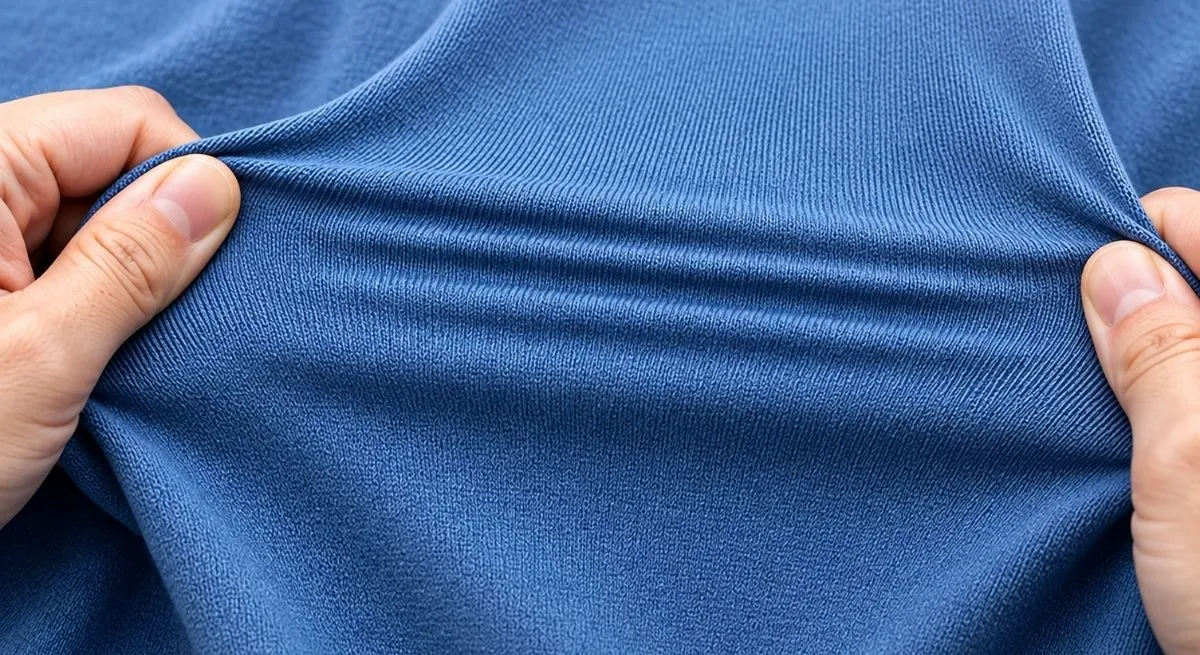
What Is Elastane Made Of?
Elastane is made from a synthetic polymer based on segmented polyurethane. The U.S. generic fiber name is spandex. Under the U.S. textile definition in 16 CFR §303.7, spandex is a manufactured fiber in which the fiber-forming substance is a long-chain synthetic polymer made up of at least 85% segmented polyurethane. You can read the legal definition at Cornell Legal Information Institute.
This polymer structure combines flexible segments with harder segments. The soft regions allow the fiber to extend, while the harder regions help pull it back toward its previous length. That is why elastane can deliver both stretch and recovery instead of simply staying elongated after movement.
Elastane is synthetic
It is not a natural fiber like cotton, wool, linen or silk. In other words, the answer to “is elastane a natural fiber?” is no.
Elastane is usually a blend component
Most apparel uses a relatively small elastane share combined with cotton, polyester, nylon/polyamide or viscose. The exact percentage should match the stretch, recovery, opacity and fit target.
How Is Elastane Made?
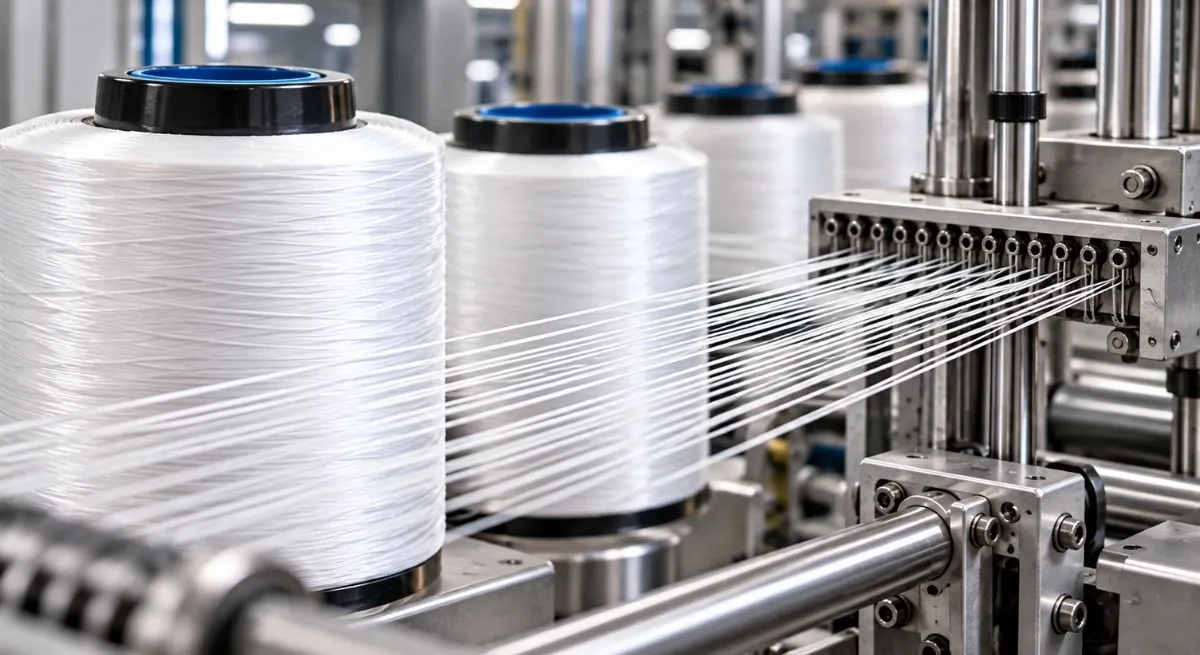
Industrial elastane production is a polymer-and-spinning process. Exact chemistry varies by producer, but the manufacturing logic is similar: create the polyurethane-based polymer, form very fine continuous filaments, finish them for textile processing, and wind the yarn so a fabric mill can knit or weave it with other fibers.
For more technical background, the U.S. Environmental Protection Agency’s synthetic-fiber documentation includes a spandex fiber manufacturing process overview.
Elastane vs Spandex vs Lycra: Are They the Same?
This is the most common naming question around the fiber. Elastane and spandex are two generic names for the same class of elastic fiber. The word “spandex” is used most often in the United States. “Elastane” is widely used in Europe and many other markets.
LYCRA, by contrast, is a trademarked brand of spandex/elastane fiber. The LYCRA Company explains that spandex and elastane are interchangeable generic terms, while LYCRA identifies its own branded fiber. See the company’s official explanation of LYCRA, spandex and elastane.
Generic textile name used widely outside the United States.
Generic termGeneric textile name commonly used in the United States.
Generic termTrademarked brand name for specific spandex/elastane fiber technologies.
Brand nameSo, for searches such as elastane vs spandex, spandex vs elastane, elastane vs Lycra, Lycra vs spandex vs elastane, or “is elastane and spandex the same,” the practical answer is straightforward: spandex and elastane describe the same generic fiber class, while LYCRA is a branded version within that class.
In everyday product listings, you may also see phrases such as elastane spandex, elastane Lycra, Lycra spandex material, spandex cloth, or poly elastane fabric. These phrases generally describe the same stretch-fiber family or a fabric blend containing that fiber; the actual performance still depends on the complete composition and construction.
Elastane Material Properties: Stretch, Recovery, Breathability & Feel
People often focus on stretch, but a good stretch fabric is not judged by extension alone. It must also recover, remain opaque at the intended stretch level, feel appropriate against the skin and survive repeated laundering.
| Property | What elastane contributes | What else affects the result |
|---|---|---|
| Stretch | High elasticity and easier movement | Elastane %, knit/weave structure, yarn construction |
| Recovery | Helps fabric return toward its original shape | Fiber quality, heat history, fabric density, finishing |
| Fit | Allows closer silhouettes without restricting movement | Pattern negative ease, garment construction |
| Breathability | Limited contribution by itself | Main fiber, GSM, porosity, knit structure, finishes |
| Moisture handling | Not the primary driver | Polyester/nylon yarn, wicking finish, fabric architecture |
| Heat resistance | Elastic performance can decline with excessive heat | Laundry temperature, drying, pressing, dyeing/finishing |
Is elastane breathable?
Elastane itself is not the part of a fabric that normally makes it breathable. A light cotton elastane jersey can feel breathable because cotton and the open knit structure allow heat and moisture vapor to move. A dense polyester elastane compression fabric can feel warmer because the fabric is tighter and covers the skin more closely.
Is elastane stretchy?
Yes. Stretch is its defining function. However, “5% elastane” does not guarantee the same stretch in every fabric. One 5% elastane jersey may have generous four-way stretch while another woven fabric with the same percentage may only provide modest comfort stretch. Construction matters as much as composition.
Common Elastane Fabric Blends
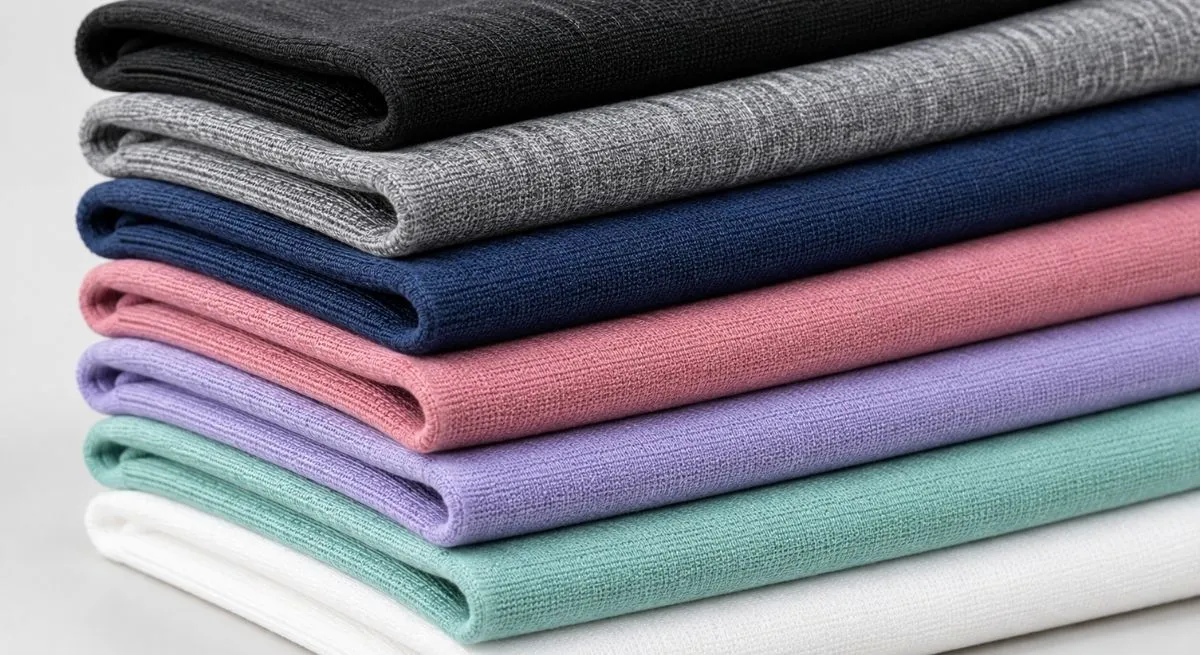
Elastane is most useful when it complements another fiber. These are the combinations buyers and apparel developers see most often.
| Blend | Typical character | Common garment uses |
|---|---|---|
| 95 cotton / 5 elastane | Soft, familiar cotton hand with clear stretch and improved recovery | Fitted T-shirts, tank tops, underwear, jersey dresses, casual leggings |
| 98 cotton / 2 elastane | Mild comfort stretch while remaining strongly cotton-dominant | Stretch jeans, chinos, woven trousers |
| 95 polyester / 5 elastane | Durable, flexible and suitable for quick-drying performance constructions | Training tops, leggings, fitted dresses, tracksuits |
| Polyester + elastane | Performance-oriented stretch blend with many possible weights and finishes | Activewear, sports uniforms, compression-style garments |
| Nylon/polyamide + elastane | Smooth, strong, flexible and often premium-feeling | Leggings, swimwear, sports bras, fitted athletic wear |
| Viscose + elastane | Soft drape with comfortable stretch | Tops, dresses, lounge sets, soft jersey apparel |
95% cotton, 5% elastane
The keyword combination “95 cotton 5 elastane” describes one of the most common everyday stretch jerseys. The cotton provides softness and a natural-fiber feel. The elastane improves mobility and shape retention. The reverse phrase “5 elastane 95 cotton” means the same composition.
95% polyester, 5% elastane
A 95 polyester 5 elastane blend is common in technical knits. It can be used for leggings, training tops, body-fitted garments and stretch tracksuits. Still, the composition label alone does not prove moisture-wicking, squat-proof opacity or four-way stretch. Those are performance outcomes that need fabric-level testing.
Polyamide and elastane
Polyamide elastane and nylon elastane fabric usually refer to the same family of blends because “polyamide” is the labeling term commonly used for nylon in many markets. These fabrics are especially popular where a smooth hand, strong recovery and abrasion resistance matter.
Viscose elastane fabric
Viscose adds fluid drape and softness, while elastane helps the garment flex and recover. Viscose-elastane jersey works well for fitted tops and dresses, but brands should control shrinkage and dimensional stability during development.
What Is Elastane Used For in Clothing?
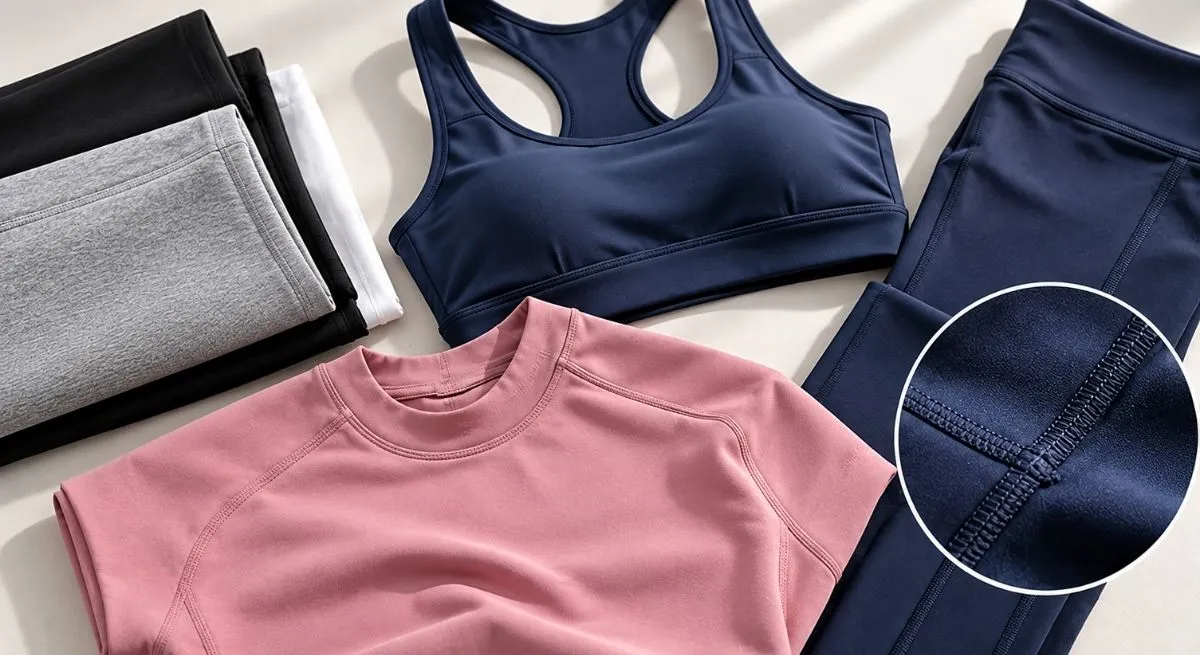
Elastane appears across both casual and technical clothing. It is especially useful where the garment must follow movement or maintain a fitted shape.
Elastane leggings
Leggings need stretch, recovery and opacity. Polyester-elastane and nylon/polyamide-elastane are common for performance styles, while cotton elastane leggings suit softer casualwear.
Elastane jeans
Stretch denim often uses a small elastane percentage. Even around 1–2% can improve comfort, but recovery testing is important to reduce knee and seat bagging.
Elastane tank tops and T-shirts
Cotton elastane jersey gives fitted tops a cleaner shape and more movement. It also helps necklines and bodies recover after wear.
Elastane shorts and activewear
Sports shorts, cycling styles, gym sets and compression-inspired products use elastane blends to allow movement without excessive loose fabric.
For manufacturing examples, Wearlets’ custom tracksuit manufacturing page shows how stretch and performance fabric choices fit into a complete product specification. For jersey garments, see the custom T-shirt manufacturing service.
Does Elastane Shrink? Washing, Drying & Heat Care
Questions such as “does elastane shrink,” “does elastane shrink in the dryer,” and “does polyester elastane shrink” are really questions about the whole blend. Elastane is heat-sensitive, while the other fiber may have its own shrinkage behavior.
For example, cotton can shrink if laundering and finishing are not controlled. Polyester is generally more dimensionally stable. High dryer or ironing heat can still weaken elastic recovery, so a garment may not look conventionally “shrunk” yet can lose its original fit over time.
- Wash stretch garments according to the main fiber and the care label.
- Avoid unnecessary high dryer temperatures.
- Use low-to-moderate ironing heat if ironing is allowed.
- Avoid strong chlorine bleach unless the garment label specifically permits it.
- Do not judge fabric quality only after one stretch; check recovery after repeated extension and laundering.
Is Elastane Toxic? Allergy, Skin Sensitivity & Latex Questions
Elastane is used widely in everyday apparel. However, a skin reaction after wearing a stretch garment does not automatically mean the elastane fiber is the cause. Textile contact dermatitis can also be associated with dyes, finishing resins, glues, rubber accelerators, latex components, friction and sweat.
DermNet notes that reactions to textile fibers themselves can occur, but allergic contact dermatitis is more commonly linked with chemicals added during textile processing. Its overview of textile contact dermatitis explains the range of possible causes.
Does elastane contain latex?
Elastane is a synthetic polyurethane-based fiber and is not the same material as natural rubber latex. Still, some finished clothing can contain separate rubber or latex elements in elastic bands, grippers, trims or components. Someone with a confirmed latex allergy should check the complete garment construction rather than relying only on the fiber-content label.
Can someone have an elastane allergy?
Reactions associated with stretch textiles are possible, but identifying the trigger can require professional assessment because a garment contains much more than its listed fibers. If clothing repeatedly causes redness, itching or scaling, stop using the suspected item and seek advice from a qualified healthcare professional or dermatologist.
Is Elastane Plastic? Does It Release Microplastics?
Elastane is a synthetic polyurethane-based polymer fiber. So, in the broad material sense behind the search “is elastane plastic” or “is spandex plastic,” it belongs to the family of synthetic polymeric materials. Textile labels, however, identify it specifically as elastane or spandex.
Synthetic textiles can release small fibers during manufacturing, wear and washing. The European Environment Agency identifies the wearing and washing of synthetic textiles as one source of microplastics and explains that shedding varies across textile systems. See the EEA report on microplastics from textiles.
That does not mean every elastane garment sheds at the same rate. Fiber blend, yarn construction, brushing, fabric density, finishing, garment age and washing conditions all affect fiber release. For brands, durability testing and choosing a stable fabric construction can matter as much as the headline fiber percentage.
How Clothing Brands Should Specify Elastane Fabric
A tech pack that says only “polyester elastane” or “cotton elastane” is incomplete. Two fabrics with the same composition can perform very differently. A manufacturer needs measurable specifications.
Composition and weight
- Exact fiber percentages
- Target GSM or oz/yd²
- Knit or weave type
- Yarn count or yarn type when relevant
Stretch and recovery
- Two-way or four-way stretch requirement
- Stretch percentage by direction
- Recovery after repeated extension
- Growth/bagging tolerance
Appearance and comfort
- Opacity at target stretch
- Hand feel and surface finish
- Compression level
- Breathability or moisture-management target
Durability and care
- Shrinkage tolerance
- Pilling and abrasion expectations
- Colorfastness requirements
- Wash and heat resistance
Manufacturing Garments With Elastane Blends
Stretch fabrics change both pattern engineering and sewing. The pattern may use negative ease, seams must tolerate extension, and the factory has to control feeding so panels do not grow or ripple during stitching. Needle choice, thread, seam type and machine settings should match the exact fabric rather than a generic “spandex material” label.
Wearlets works with cotton-elastane, polyester-elastane and polyamide-elastane constructions for private-label apparel, activewear and sportswear. For a new brand, the safest route is to approve a physical sample before bulk so fit, stretch recovery, opacity and shrinkage are confirmed in the actual garment.
If you are planning a small first run, our low MOQ clothing manufacturing guide explains how sampling and small-batch production work.
Elastane vs Polyester: Different Jobs in the Same Fabric
Elastane vs polyester is not an either-or comparison. Polyester is commonly the main structural fiber, while elastane is added to provide elasticity. A polyester elastane fabric can therefore combine the durability and quick-drying potential of polyester with the stretch and recovery of elastane.
The same principle applies to cotton elastane, polyamide elastane and viscose elastane. The base fiber supplies most of the touch, drape and moisture behavior; elastane modifies flexibility and fit.
How to Read an Elastane Clothing Label
A label such as “95% polyester, 5% elastane” tells you the fiber composition, but it cannot tell you everything about performance. Before buying or manufacturing a fitted garment, consider the construction and intended use as well.
- For leggings: check opacity under stretch, recovery and waistband stability.
- For jeans: check whether the denim recovers after sitting and knee flexion.
- For activewear: check stretch direction, moisture management, seam strength and pilling.
- For fitted cotton tops: check shrinkage and neckline/body recovery after washing.
- For swimwear: check chlorine, saltwater and heat requirements in addition to stretch.
Useful technical sources
Frequently Asked Questions About Elastane, Spandex & Lycra
These answers cover the most common questions about elastane material, stretch blends, care, safety and clothing uses.
What is elastane?
Elastane is a synthetic elastic textile fiber made from segmented polyurethane. It is usually blended with cotton, polyester, nylon or viscose to add stretch, recovery and a closer fit.
What is elastane fabric?
Elastane fabric usually means a fabric blend that contains elastane rather than a fabric made from 100% elastane. A label such as 95% cotton and 5% elastane describes a cotton-rich fabric with added stretch.
What is elastane made of?
Elastane is made from a long-chain synthetic polymer based on segmented polyurethane. In U.S. textile rules, spandex is defined as a manufactured fiber whose fiber-forming substance contains at least 85% segmented polyurethane.
What is elastane material used for?
Elastane is used where a garment needs stretch and shape recovery, including leggings, activewear, swimwear, fitted T-shirts, underwear, jeans, sports uniforms and stretch woven garments.
Is elastane the same as spandex?
Yes. Elastane and spandex are generic names for the same class of elastic synthetic fiber. Spandex is the common U.S. term, while elastane is widely used in Europe and many other markets.
Is elastane and Lycra the same?
Elastane is the generic fiber category. LYCRA is a trademarked brand of spandex/elastane fiber from The LYCRA Company, so all LYCRA fiber is elastane/spandex, but not all elastane is LYCRA-branded fiber.
What is the difference between Lycra, spandex and elastane?
Spandex and elastane are interchangeable generic terms for the same fiber. LYCRA is a brand name for a specific family of spandex/elastane fibers.
Is elastane stretchy?
Yes. High elasticity and recovery are the defining properties of elastane. Even a small percentage can make a fabric noticeably more flexible and help it return toward its original shape.
Is elastane breathable?
Elastane itself is not known for high breathability. In a blend, breathability depends mostly on the main fiber, yarn size, knit or weave structure, fabric weight and finishing. Cotton-elastane can feel more breathable than a dense polyester-elastane fabric.
Does elastane shrink?
Elastane does not behave like cotton shrinkage, but high heat can damage elastic performance. In blends, the cotton, viscose or other main fiber may shrink while heat also weakens the elastane, changing both size and recovery.
Does elastane shrink in the dryer?
High dryer temperatures can shorten the useful life of elastane and may also shrink the main fiber in a blend. Low heat or air drying is usually a safer choice when the care label allows it.
Does polyester elastane shrink?
Polyester itself is relatively dimensionally stable, so polyester-elastane blends usually shrink less than cotton-rich blends. However, excessive heat can still damage the elastane and distort fit.
Is polyester elastane stretchy?
Yes when the blend contains enough elastane and the fabric construction allows extension. A polyester-elastane knit is widely used for activewear because it can combine stretch, recovery and quick-drying performance.
What is 95 polyester 5 elastane fabric?
A 95% polyester, 5% elastane fabric is a polyester-rich stretch blend. Depending on knit structure and GSM, it can work well for leggings, sports tops, fitted dresses, tracksuits and performance garments.
What is 95 cotton 5 elastane fabric?
A 95% cotton, 5% elastane blend keeps the soft, familiar feel of cotton while adding useful stretch and better shape recovery. It is common in fitted T-shirts, jersey tops, underwear, leggings and casualwear.
What is 98 cotton 2 elastane fabric?
A 98% cotton, 2% elastane blend provides mild stretch while keeping a mostly cotton hand feel. It is especially common in stretch denim, chinos and fitted woven trousers.
What is cotton elastane jersey fabric?
Cotton elastane jersey is a knitted cotton-rich fabric with a small elastane percentage. It is soft, flexible and commonly used for T-shirts, tank tops, dresses, shorts, underwear and children's clothing.
What is polyester and elastane material?
Polyester and elastane material is a synthetic stretch blend in which polyester supplies durability and moisture-management potential while elastane supplies elasticity and recovery.
What is nylon elastane fabric?
Nylon-elastane, also called polyamide-elastane in many markets, is a smooth, strong and highly flexible blend widely used for premium leggings, swimwear, sports bras and compression-style garments.
What is polyamide elastane?
Polyamide is another name commonly used for nylon in apparel labeling. A polyamide-elastane fabric combines nylon's strength and smooth hand with elastane's stretch and recovery.
What is viscose elastane fabric?
Viscose-elastane fabric combines viscose's soft drape with added flexibility. It is often used for fitted tops, dresses, loungewear and soft jersey garments.
Are elastane leggings good?
Elastane leggings can provide strong mobility and shape retention when the blend, knit density, GSM and recovery are matched to the intended use. Opacity and compression depend on the full fabric specification, not only the elastane percentage.
Why is elastane used in jeans?
A small amount of elastane lets denim flex at the hips, knees and waist, improving comfort and mobility. Too much stretch or weak recovery can make jeans bag out, so brands should test recovery as well as stretch.
Is elastane plastic?
Elastane is a synthetic polymer fiber based on polyurethane, so it belongs to the broader family of polymeric materials often described as plastics. In textile labeling, however, it is identified as a manufactured fiber.
Is spandex plastic?
Spandex is the U.S. name for elastane, a synthetic polyurethane-based fiber. In that broad material sense it is polymeric, although apparel labels identify it as spandex rather than simply as plastic.
Does elastane contain latex?
Elastane is not natural rubber latex. However, a finished garment can contain separate rubber or latex components in waistbands, grippers or elastic trims, so people with a latex allergy should check the complete product construction.
Is elastane toxic or bad for you?
For normal clothing use, elastane is widely used as a textile fiber. Some people can develop textile contact dermatitis, but reactions are often linked to dyes, finishing agents, rubber components or other additives rather than the fiber alone. Persistent skin reactions should be assessed by a qualified clinician.
Can you be allergic to elastane?
Allergic or irritant reactions associated with stretch garments can occur, although true fiber allergy is uncommon. Dyes, finishing chemicals, rubber accelerators, latex, friction and sweat can also be responsible.
Does elastane release microplastics?
Elastane is a synthetic polymer fiber. Synthetic textiles can release microfibers during wear and washing, although shedding varies with yarn, fabric construction, finishing, garment age and laundering conditions.
How should elastane clothing be washed?
Follow the garment care label first. In general, cool or warm gentle washing, mild detergent and low-heat or air drying help protect elasticity. Avoid unnecessary high heat and strong chlorine bleach.
How is elastane made?
Industrial elastane production forms a polyurethane-based polymer, prepares it for spinning, extrudes it through fine openings into filaments, removes the processing medium, combines and finishes the filaments, then winds the elastic yarn for textile use.
Is elastane a natural fiber?
No. Elastane is a manufactured synthetic fiber. It is commonly blended with natural fibers such as cotton as well as synthetic fibers such as polyester and nylon.
What do elastine, elastene and elestane mean?
They are common misspellings of elastane. The standard spelling used on many international textile labels is elastane.
What do spandix, spandez, spandax and soandex mean?
These are common misspellings of spandex. The correct U.S. generic fiber term is spandex.
What is spandex fabric?
Spandex fabric usually means a textile that contains spandex, the U.S. term for elastane. Most spandex cloth is a blend such as polyester-spandex, nylon-spandex or cotton-spandex rather than 100% spandex.
What is spandex made from?
Spandex is made from a long-chain synthetic polymer based on segmented polyurethane. It is the same generic fiber class called elastane in many countries.
Is spandex toxic or bad for you?
Spandex is widely used in normal apparel. Skin irritation from a garment can have several causes, including dyes, finishes, rubber components, friction and sweat. If a specific garment repeatedly causes a reaction, stop wearing it and seek medical advice.
Is spandex and elastane the same?
Yes. Spandex and elastane are generic names for the same elastic manufactured fiber. The terminology changes mainly by market and labeling convention.
Is spandex and Lycra the same?
Spandex is a generic fiber name. LYCRA is a trademarked brand of spandex/elastane fiber, so the terms are related but not identical in branding.
What is Lycra spandex?
Lycra spandex refers to LYCRA-branded spandex/elastane fiber. LYCRA is a trademark, while spandex and elastane are generic fiber terms.
Does spandex have microplastics?
Spandex is a synthetic polymer fiber, and synthetic textiles can release microfibers during wear and washing. The amount varies by fabric construction, yarn, finishing, garment age and laundering conditions.
Is elastane latex, or does elastane have latex in it?
No. Elastane itself is a polyurethane-based synthetic fiber, not natural rubber latex. A finished garment can still contain separate latex or rubber in trims, waistbands or grippers.
What is elastane made from?
Elastane is made from segmented polyurethane-based synthetic polymers that are formed into elastic filaments and then used in textile yarns and fabric blends.
What material is elastane?
Elastane is a synthetic manufactured textile fiber based on polyurethane. In the United States, the same generic fiber is usually labeled spandex.
Is elastane spandex?
Yes. Elastane and spandex are two names for the same generic elastic fiber class.
Is elastane fabric good or bad?
Elastane is useful when a garment needs mobility, close fit and shape recovery. Its trade-offs include heat sensitivity and the environmental considerations that apply to synthetic fibers. Whether it is a good choice depends on the product and performance target.
What is elastine?
Elastine is a common misspelling of elastane. On apparel labels, the correct fiber term is typically elastane or, in the United States, spandex.
What is polyester and elastane fabric?
Polyester and elastane fabric is a stretch blend in which polyester is usually the main fiber and elastane supplies extra elasticity and recovery. It is widely used in activewear and fitted garments.
What is elastane nylon fabric?
Elastane nylon fabric is a nylon-elastane blend, also commonly labeled polyamide-elastane. It is smooth, durable and widely used for leggings, swimwear and performance clothing.
Final Takeaway: What Is Elastane?
Elastane is a synthetic polyurethane-based elastic fiber used to add stretch and recovery to clothing. Spandex is the common U.S. name for the same generic fiber, while LYCRA is a trademarked brand. In most garments, elastane is a small but important part of a blend with cotton, polyester, nylon/polyamide or viscose.
When choosing or manufacturing elastane fabric, do not stop at the percentage on the label. The best results come from matching composition with fabric construction, GSM, stretch direction, recovery, opacity, shrinkage and care requirements.