 WEARLETS
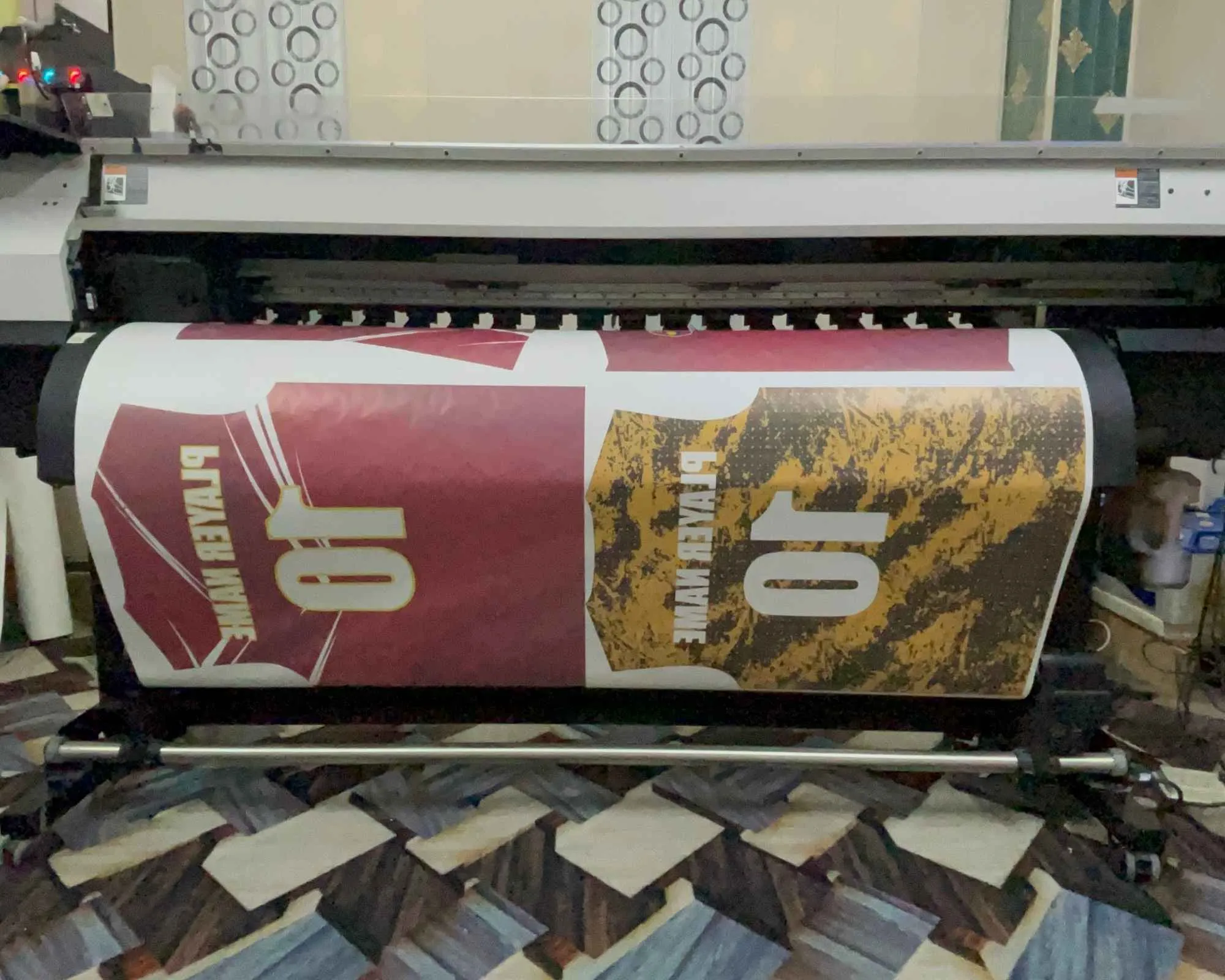
What is sublimation printing — Machines, Paper, Ink & Fabric
Wearlets uses industrial sublimation printers, premium sublimation transfer paper, and true dye sublimation printing ink to produce vivid, permanent all-over prints for jerseys, hoodies, and polo shirts. Below: exactly how our fabric sublimation process works, machine by machine. We also offer screen printing, DTF & embroidery.
What Is Sublimation Printing?
Sublimation printing — also called dye sublimation printing — is a digital printing method where solid dye is converted directly into gas using heat, skipping the liquid phase entirely (a physical process technically called sublimation). That gas then bonds permanently with polyester fibers at a molecular level. The result: a print with zero texture, zero cracking, and colors that outlast the garment itself.
Unlike screen printing or DTF, there is no ink layer sitting on top of the fabric — the dye becomes part of the fiber. This is why sublimation print and sublimation prints feel completely soft to the touch, with no raised surface, peeling, or cracking even after hundreds of washes.
Quick definition: Dye sublimation = solid → gas → permanently bonded fiber. No liquid stage, no surface layer, no fading.
The Sublimation Printers & Machines We Use
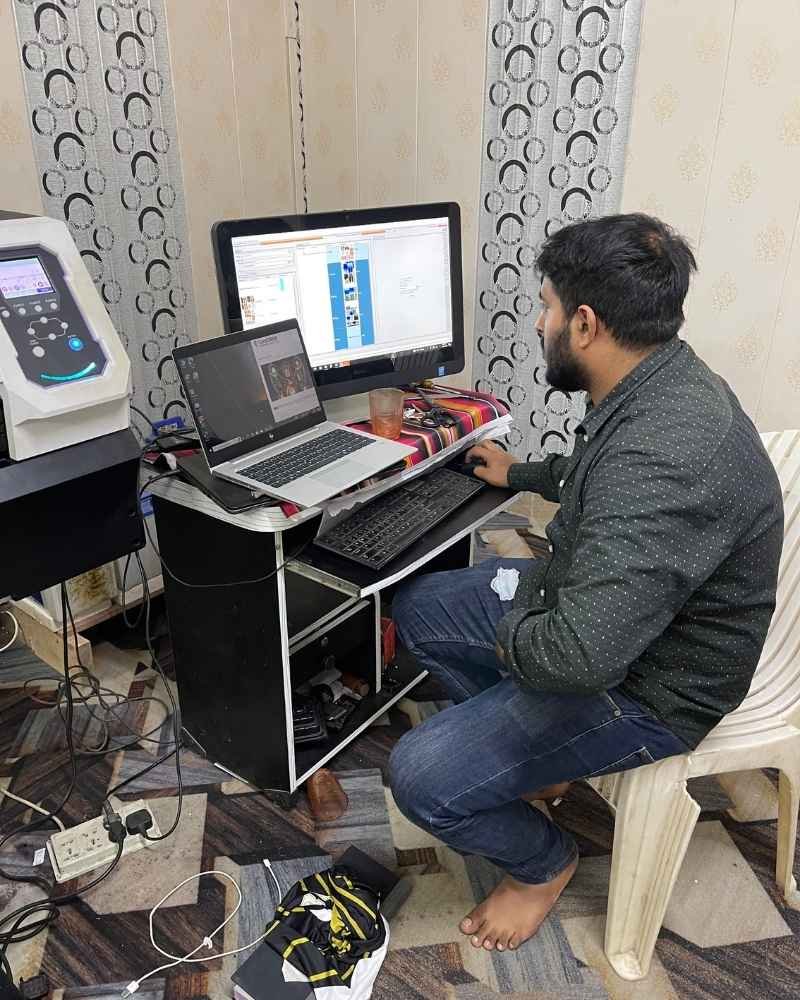
Producing consistent, vivid sublimation prints at scale requires far more than a desktop setup. Our production floor runs on industrial-grade sublimation printers and dye-sublimation printers purpose-built for continuous, high-volume fabric output — not the small dye sublimation photo printer used for one-off mugs or phone cases.
Wide Format Sublimation Printers
Our core equipment is wide format sublimation printer systems capable of printing continuous rolls of polyester fabric up to full bolt width. This lets us run complete digital pattern designs — all-over prints, gradients, photographic imagery — without visible seams or repeat lines.
Industrial Heat Press Units
Every printed sheet moves to a heat press for sublimation printing — a calibrated, large-format press that applies uniform heat (approximately 400°F) and even pressure across the full garment panel, ensuring the sublimation ink printer output transfers cleanly with no faded edges or "ghosting."
Roll-to-Roll Sublimation Printer
Continuous fabric feed for full-bolt printing — used for jerseys, leggings, and yardage runs with zero pattern breaks.
Calendar Heat Press
A rotating drum heat press for large-volume fabric transfer — faster throughput than flat-bed presses for bulk orders.
Flat-Bed Heat Press
Used for finished garment pieces, panels, and small-batch sublimation printer for shirts work requiring precision alignment.
Color Calibration System
Every sublimation printer ink batch is profiled against Pantone references before a production run begins.
Sublimation Paper — What It Is & How We Use It
Sublimation papers, also called sublimation transfer paper or sublimation printing paper, is a specially coated paper that holds ink on its surface layer rather than absorbing it fully — like standard printer paper would. This coating lets the dye release cleanly under heat instead of soaking permanently into the paper fibers.
We use premium sublimation roll paper for continuous wide-format runs and sheet-fed sublimation printer paper for smaller sample and sampling runs. Both are stored flat, away from humidity — curling from moisture is the single biggest cause of misaligned prints in this industry.
What Is Sublimation Paper Used For?
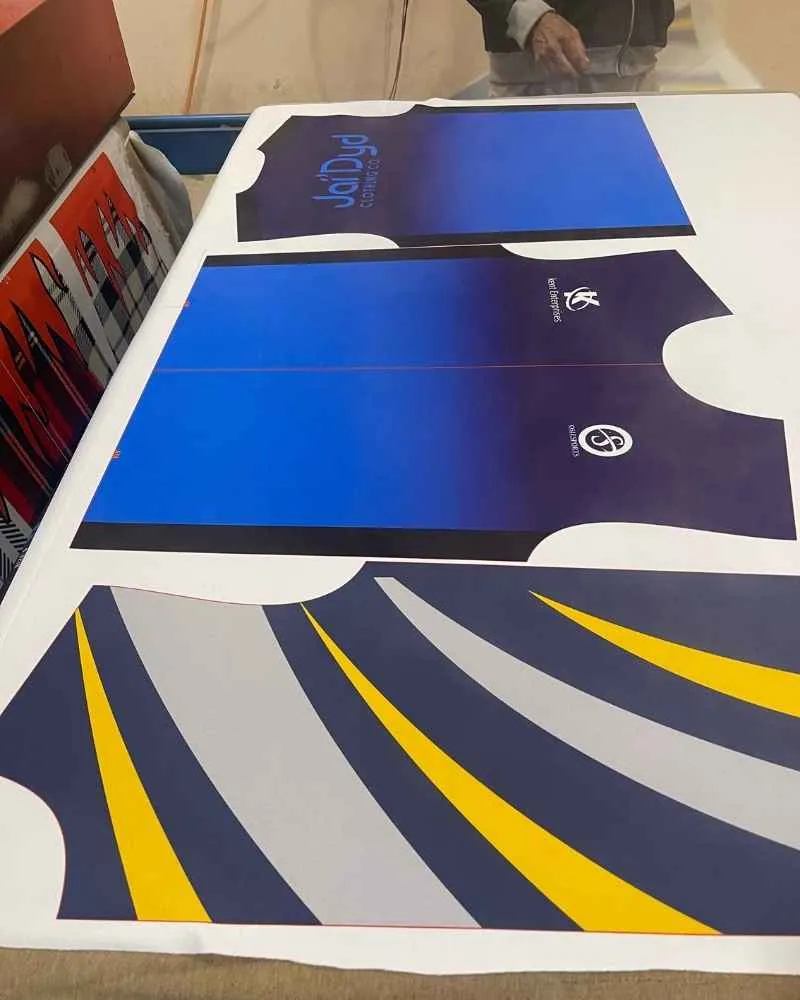
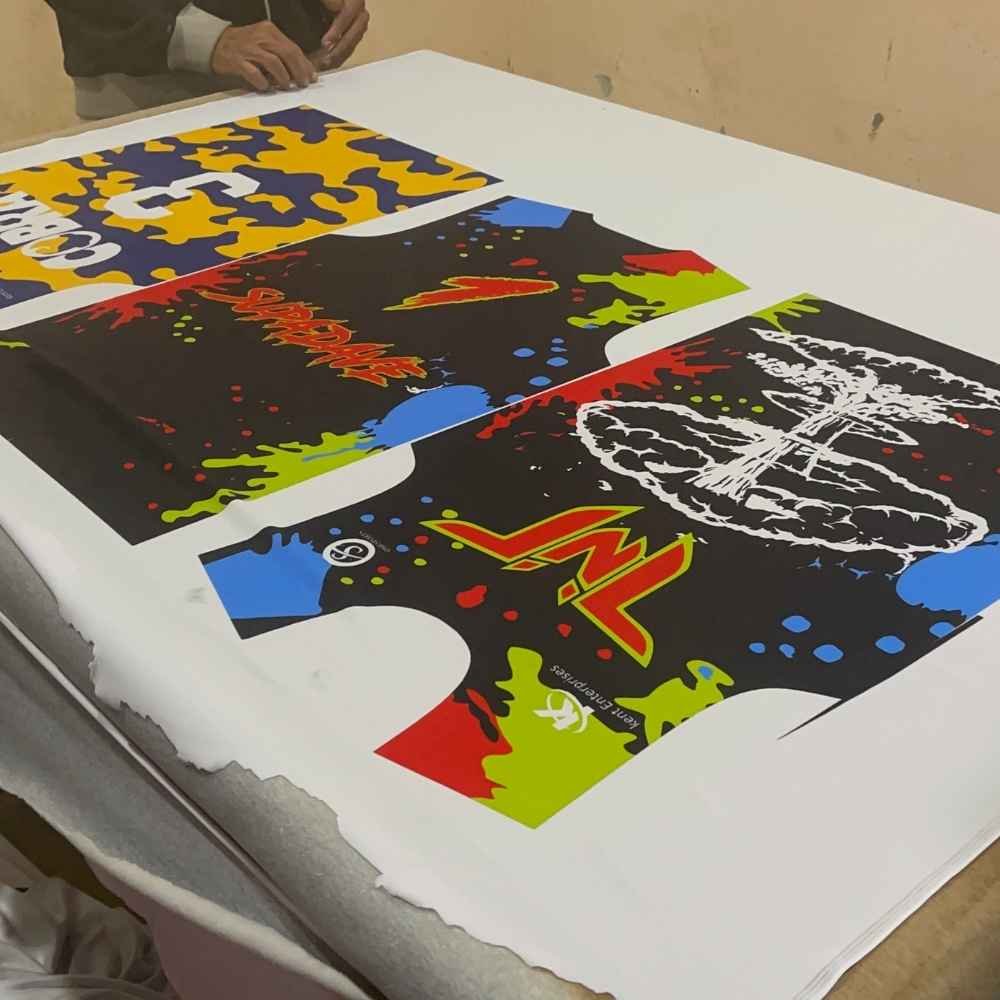
Its sole job is to act as a transfer medium: the sublimation ink printer deposits a mirrored design onto the paper, and the heat press then transfers that design into the fabric. The paper itself is discarded after one use.
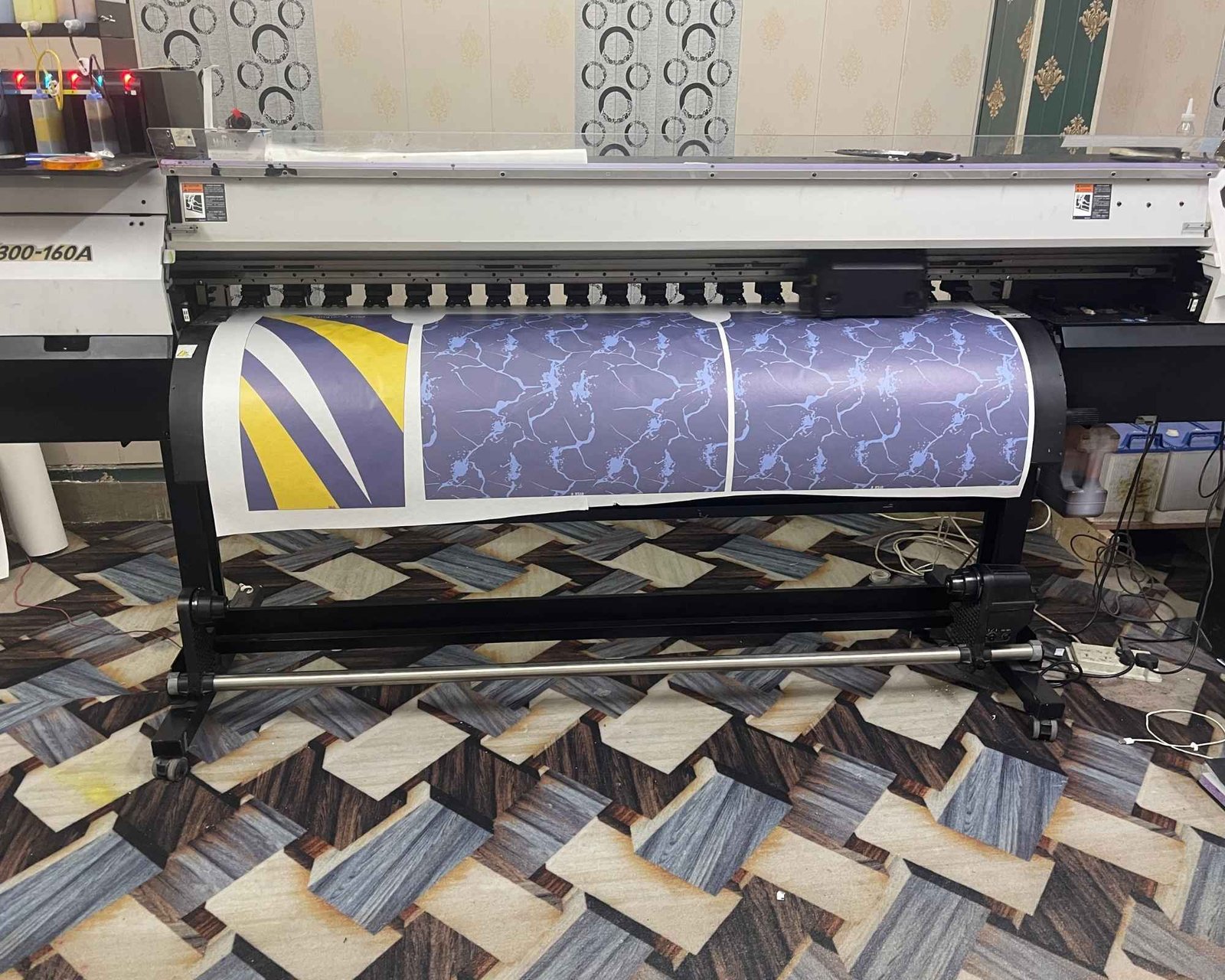
✔ Sublimation Paper on Light / White Fabric
Colors transfer true-to-design. This is the standard use case for all-over prints, jerseys, and light-base polo shirts.
⚠ Sublimation Paper for Dark Fabric
Sublimated dye is transparent, so it needs a light base to show correctly. For dark garments, we recommend a white polyester underbase or an alternative method such as DTF.
Sublimation Ink — Formulation & How It Bonds
Sublimation inks — sometimes shortened to sublim ink — is fundamentally different from standard pigment ink. It contains disperse dyes suspended in a water-based carrier, engineered specifically to convert from solid to gas under heat without ever passing through a liquid state.
This is what is sublimation ink in practical terms: a dye that "disappears" into the air at around 400°F and re-solidifies inside the open polymer structure of polyester fiber as it cools — permanently embedding the color rather than sitting on the surface. It is not the same as ink for a standard sublimation ink for inkjet printer conversion kit sold for home use; ours is production-grade and continuously color-profiled.
Important distinction: Can you use sublimation ink for regular printing? No — sublimation ink is chemically incompatible with standard paper printing and will not perform correctly outside a heat-transfer sublimation workflow.
Best Sublimation Ink for Consistent Color
We source only best sublimation ink grades verified for color consistency batch-to-batch. Cheaper generic ink for sublimation often causes visible banding or metamerism (colors shifting under different lighting) — a common failure point we avoid through supplier vetting and in-house testing.
Digital Pattern Design for Sublimation
Every sublimation job starts as a digital pattern — a design file built in Adobe Illustrator or Photoshop with the correct bleed allowance, color profile (typically CMYK converted for sublimation ink response), and mirrored orientation required by the sublimation printer.
Because sublimation has no color-count limit the way screen printing does, digital patterns can include gradients, photographic imagery, and unlimited color combinations across the entire garment.
The Fabric Sublimation Process — Step by Step
Here is exactly how a dye sublimation printing order moves through our production floor, from digital file to finished garment.
Digital Pattern Preparation
Your design is converted into a print-ready digital pattern, color-corrected for the sublimation ink profile, and mirrored for transfer.
Printing onto Sublimation Paper
The sublimation printer deposits the mirrored design onto sublimation transfer paper using calibrated sublimation ink.
Heat Press Transfer
The printed paper is pressed against the fabric under a heat press for sublimation printing at approximately 400°F, converting the dye to gas.
Dye Bonding
As the gas cools, it re-solidifies inside the polyester fiber structure — permanently locking in color at a molecular level.
Cutting & Sewing
Printed fabric panels are cut to pattern and sewn into the finished garment — hoodie, jersey, polo, or legging.
Quality Check & Shipping
Each piece is inspected for color accuracy and print alignment before packaging and export to the USA, UK, Canada, or Australia.
10+ Fabrics Compatible with the Sublimation Process
The fabric sublimation process requires a high polyester content — the polymer structure is what allows the dye gas to bond permanently. Below are the fabrics we regularly run through sublimation, with typical GSM (grams per square meter) weight ranges for each.
| Fabric | Polyester % | Typical GSM | Sublimation Result | Common Use |
|---|---|---|---|---|
| 100% Polyester Jersey | 100% | 140–180 GSM | Excellent | Sports jerseys, t-shirts |
| Polyester Interlock | 100% | 180–220 GSM | Excellent | Polo shirts, uniforms |
| Polyester Pique | 100% | 170–210 GSM | Excellent | Sport polo shirts |
| Polyester Spandex (4-Way Stretch) | 82–88% | 200–260 GSM | Very Good | Leggings, swimwear, activewear |
| Polyester Fleece | 100% | 240–320 GSM | Excellent | Hoodies, sweatshirts |
Polyester Mesh | 100% | 110–150 GSM | Excellent | Jersey side panels, sportswear vents |
| Bird Eye Mesh Polyester | 100% | 150–180 GSM | Excellent | Golf & performance polos |
| Microfiber Polyester | 100% | 90–140 GSM | Excellent | Scarves, lightweight tops |
| Polyester Satin | 100% | 80–120 GSM | Very Good | Team jackets, linings |
| Poly-Cotton Blend (65/35) | 65% | 160–200 GSM | Moderate — muted tones | Casual tees, blended basics |
| Poly-Cotton Blend (80/20) | 80% | 180–220 GSM | Good — softer hand-feel | Premium blended apparel |
| 100% Cotton | 0% | — | Not Compatible | Use screen printing or DTF instead |
Sublimation vs Screen Printing — Which Should You Choose?
The sublimation vs screen printing decision comes down to design complexity, fabric type, and order volume. Here's how the dye sublimation printing process compares to traditional screen printing.
| Factor | Sublimation Printing | Screen Printing |
|---|---|---|
| Color Count | Unlimited | Priced per color — usually 1–6 |
| Fabric Requirement | Polyester / high-poly blend | Works on cotton & blends |
| Print Durability | Permanent — never cracks or peels | Can crack or fade over years |
| Hand Feel | Zero texture — bonded into fiber | Slightly raised ink layer |
| Best For | All-over prints, photographic designs, jerseys | Simple bold designs, large bulk cotton runs |
| Cost at Low Volume | Moderate | Most economical for simple designs |
Sublimation terms covered on this page:
Why Brands Choose Wearlets for Sublimation Printing
Beyond sublimation, brands sourcing matching product lines also use our tracksuit manufacturing and polo shirt manufacturing services — both regularly produced with sublimated fabric.
Industrial Sublimation Printers
Wide format output for full-bolt, seamless all-over prints — not desktop-scale equipment.
Calibrated Color Matching
Pantone-referenced sublimation ink profiling before every production run begins.
10+ Compatible Fabrics
From lightweight mesh to heavyweight fleece — GSM-matched to your product category.
25-Piece Low MOQ
Test a design at small scale before committing to bulk sublimation production.
Explore Our Other Manufacturing Services
Sublimation Printing — Frequently Asked Questions
Everything brands and buyers ask about sublimation printers, paper, ink, and the fabric sublimation process.
What is sublimation printing?
What is a sublimation printer and how does it work?
What is sublimation ink made of?
Can you use sublimation ink for regular printing?
What is sublimation paper used for?
Can sublimation paper be used on dark fabric?
What fabrics work best for the fabric sublimation process?
Can sublimation be done on cotton fabric?
What is a digital pattern in sublimation printing?
What is dye sublimation printing used for?
How is sublimation different from screen printing?
Where can I find sublimation printing services near me?
What is the best sublimation printer for beginners?
Do I need a heat press for sublimation printing?
Can sublimation ink be used with any inkjet printer?
How do you store sublimation paper to prevent curling?
What is the difference between sublimation ink and sublim ink?
Is sublimation paper waterproof, and is there a sticker version?
Do you manufacture sublimation paper, or only use it for production?
How do you use sublimation sticker paper?
Should I search "sublimation printer near me" for bulk orders?
How do I get started with a sublimation printing order?
Ready to Start Your Sublimation Order?
Send us your design and target fabric — we'll confirm the right GSM, polyester blend, and production timeline within 24 hours.
Wearlets — Custom clothing manufacturer based in Sialkot, Pakistan. Serving the USA and Europe since 2004. | FAQs | All Services | Reference: Dye-sublimation printing — Wikipedia