 WEARLETS

working with clothing manufacturers
Starting a clothing brand is exciting, but finding and working with the right manufacturer can determine whether your brand succeeds or struggles. From product quality and fabric sourcing to production timelines and private labeling, every step matters when building a professional apparel business.
Whether you are launching a streetwear label, gym wear brand, sportswear collection, or private label clothing business, understanding how clothing manufacturing works will help you avoid expensive mistakes and build a reliable long-term partnership.
At Wearlets, we work with startups, fashion brands, and wholesalers worldwide by providing custom apparel manufacturing and private label production services
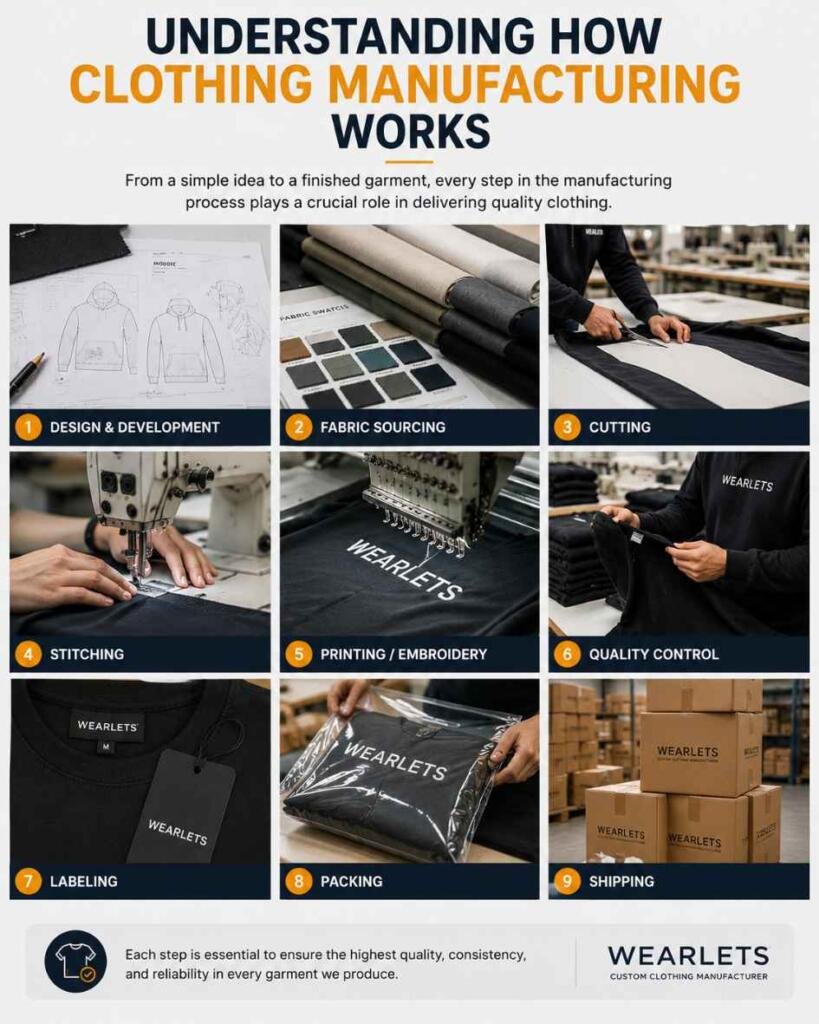
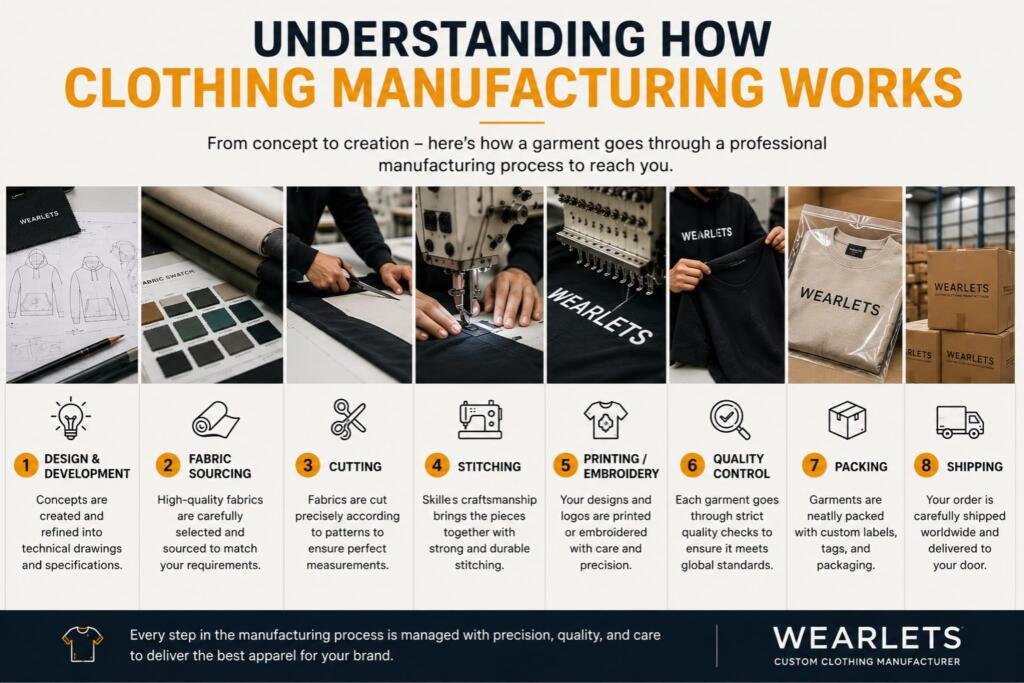
Understanding How Clothing Manufacturing Works
Clothing manufacturing is the process of transforming an idea into a finished garment ready for sale. A manufacturer handles various stages of production, including:
- Fabric sourcing
- Pattern making
- Sampling
- Cutting
- Printing or embroidery
- Stitching
- Quality control
- Packing and shipping
Most modern apparel manufacturers also offer private labeling services, allowing brands to customize labels, packaging, trims, and branding elements.
Working with an experienced manufacturer helps businesses maintain product consistency, scale production, and improve overall product quality.
Why Choosing the Right Clothing Manufacturer Matters ?
Your manufacturer directly affects:
- Product quality
- Customer satisfaction
- Delivery timelines
- Brand reputation
- Profit margins
- Long-term scalability
A reliable manufacturing partner can help your business grow faster, while poor production management can damage your brand reputation quickly.
Many startups struggle because they choose manufacturers based only on low pricing rather than communication, quality control, and production capabilities.
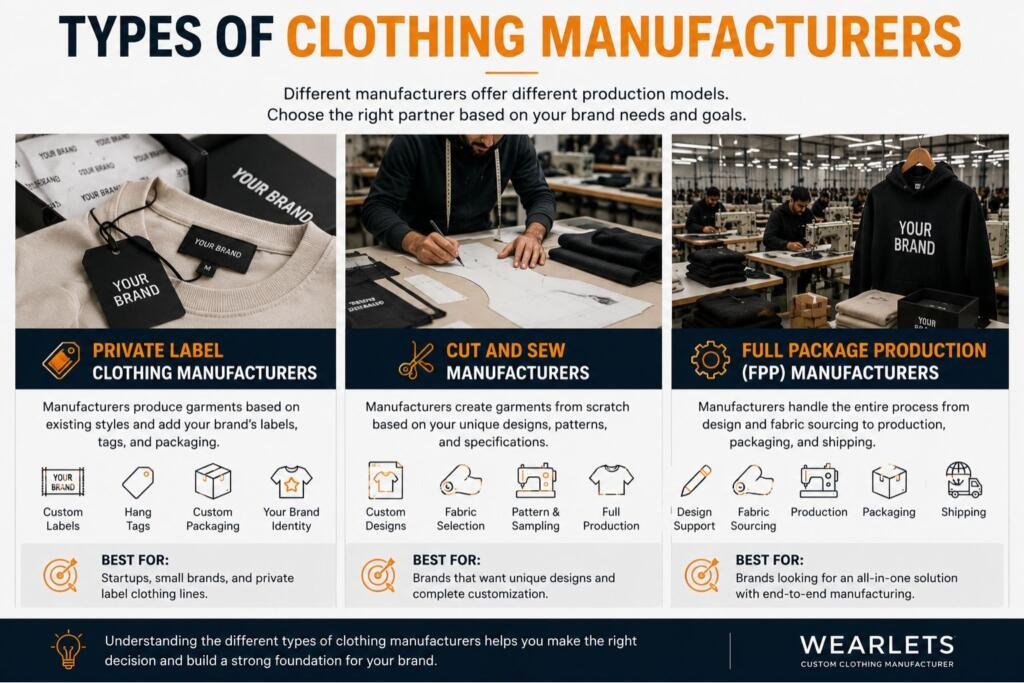
Types of Clothing Manufacturers
Different manufacturers specialize in different production models. Understanding the categories helps you choose the right partner.
Private Label Clothing Manufacturers
Private label manufacturers produce garments that carry your brand name and labels. This is one of the most common models for startups and fashion brands.
Private label production usually includes:
- Custom neck labels
- Hang tags
- Packaging
- Custom fabrics
- Brand logos
- Embroidery and printing
Wearlets Private Label Manufacturing offers low MOQ private label production for startups and growing brands.
Cut and Sew Manufacturers
Cut and sew manufacturers create garments completely from scratch using your designs, measurements, and specifications.
This option gives brands full customization control but often requires:
- Tech packs
- Detailed measurements
- Fabric specifications
- Higher production planning
Cut and sew manufacturing is ideal for brands that want unique designs rather than blank apparel customization.
Full Package Production (FPP) Manufacturers
FPP manufacturers manage the entire production process, including:
- Design support
- Fabric sourcing
- Sampling
- Production
- Packaging
- Shipping
This model is ideal for startups with limited manufacturing experience.
How to Find Clothing Manufacturers
Finding the right clothing manufacturer requires research, communication, and sample testing.
Search Manufacturer Websites
Professional manufacturers typically showcase:
- Product categories
- Production capabilities
- MOQ information
- Fabric options
- Previous work
- Contact details
For example, Wearlets Custom Clothing Manufacturing highlights services including hoodies, sweatshirts, tracksuits, varsity jackets, polos, and sportswear production.
Use Industry Platforms for working with clothing manufacturers
Many fashion startups search for manufacturers through:
- Trade directories
- B2B sourcing platforms
- Textile expos
- Apparel manufacturing marketplaces
Check Online Communities
Fashion entrepreneurs frequently discuss manufacturing experiences on platforms like Reddit. Many startup owners recommend focusing on communication, MOQ flexibility, and quality control instead of choosing the cheapest supplier.
What to Prepare Before Contacting a Manufacturer
Before reaching out to a manufacturer, prepare the following information:
Product Details
Explain exactly what you want to produce, including:
- Product type
- Fabric composition
- GSM
- Colors
- Sizes
- Fit
- Design references
Tech Pack for working with clothing manufacturers
A tech pack is one of the most important documents in apparel manufacturing.
It usually includes:
- Measurements
- Fabric details
- Stitching instructions
- Artwork placement
- Printing methods
- Label details
A detailed tech pack reduces production mistakes and improves communication.
Quantity Requirements
Manufacturers need to know your expected order quantity.
Many startup-friendly manufacturers offer lower MOQs between 50–100 pieces depending on product type.
Understanding MOQ in Clothing Manufacturing
MOQ stands for Minimum Order Quantity.
This is the minimum number of pieces a manufacturer requires for production.
MOQs depend on factors such as:
- Fabric sourcing
- Printing setup
- Custom trims
- Production efficiency
Lower MOQs are ideal for:
- Startups
- Small brands
- Test collections
- New product launches
At Wearlets FAQs, the stated MOQ starts from 50–100 pieces depending on the product.
Fabric Selection and Material Sourcing
Fabric quality is one of the biggest factors affecting customer satisfaction.
Choosing the right material depends on your niche.
Popular Fabric Options
| Fabric Type | Common Uses |
|---|---|
| Cotton | T-shirts, hoodies, streetwear |
| Cotton Fleece | Sweatshirts, hoodies |
| French Terry | Premium casualwear |
| Polyester | Sportswear |
| Spandex Blends | Activewear |
| Cotton Pique | Polo shirts |
| Recycled Polyester | Sustainable apparel |
Manufacturers may also offer:
- Organic cotton
- Bamboo fabrics
- Moisture-wicking materials
- Anti-pilling fabrics
- Performance textiles
Sampling Process Explained
Before bulk production, manufacturers create samples to verify:
- Fit
- Fabric quality
- Printing quality
- Measurements
- Stitching
- Branding placement
Never skip the sampling stage.
A professional sample helps identify issues before mass production begins.
Production Timeline Expectations
Production times vary depending on:
- Product complexity
- Fabric availability
- Customization level
- Order quantity
- Seasonality
Typical timelines:
| Production Stage | Estimated Time |
|---|---|
| Sample Development | 7–14 Days |
| Fabric Sourcing | 5–15 Days |
| Bulk Production | 2–6 Weeks |
| Shipping | 5–15 Days |
Always discuss timelines clearly before confirming orders.
Quality Control in Apparel Manufacturing
Quality control is essential for maintaining consistency across production.
Professional manufacturers inspect:
- Stitching quality
- Measurements
- Fabric defects
- Print accuracy
- Packaging standards
According to Wearlets Manufacturing Process, inspection and quality control are included as a dedicated production stage.
Printing and Embroidery Options
Most custom clothing manufacturers provide multiple decoration methods.
Screen Printing
Best for:
- Bulk production
- Streetwear
- Bold graphics
DTG Printing
Best for:
- Small runs
- Detailed artwork
- Multi-color prints
Embroidery
Best for:
- Premium branding
- Hoodies
- Polos
- Caps
- Varsity jackets
Sublimation Printing
Best for:
- Sportswear
- Polyester garments
- Full-color designs
Private Label Branding Options
Strong branding helps clothing brands appear professional.
Private label customization may include:
- Woven labels
- Satin labels
- Neck printing
- Hang tags
- Poly bags
- Custom packaging
These details improve brand identity and customer experience.
Common Mistakes to Avoid When Working With Manufacturers
Choosing Only Based on Price
Low-cost production often leads to:
- Poor stitching
- Fabric inconsistency
- Delayed shipping
- Weak communication
Ignoring Samples
Skipping samples increases production risks significantly.
Always approve samples before bulk manufacturing.
Poor Communication
Clear communication prevents mistakes in:
- Measurements
- Colors
- Printing
- Packaging
- Timelines
Unrealistic Expectations
New brands sometimes expect extremely low MOQs, fast production, and premium customization simultaneously.
Understanding production realities helps build stronger manufacturer relationships.
Questions to Ask Before Hiring a Clothing Manufacturer
Before placing an order, ask:
- What is your MOQ?
- What fabrics do you offer?
- Do you provide samples?
- What are your production timelines?
- Can you handle private labeling?
- What printing methods do you offer?
- How do you manage quality control?
- What countries do you ship to?
- What payment terms do you require?
- Do you work with startups?
Benefits of Working With Pakistani Clothing Manufacturers
Pakistan is one of the leading global textile manufacturing regions, especially for sportswear, streetwear, and cotton apparel production.
Advantages include:
- Competitive pricing
- Skilled labor
- Strong textile infrastructure
- Cotton fabric expertise
- Flexible MOQs
- Faster sampling
Cities like Sialkot are globally recognized for apparel and sportswear manufacturing.
Why Startups Prefer Low MOQ Manufacturers
Low MOQ manufacturing allows brands to:
- Test products
- Reduce risk
- Control inventory
- Launch faster
- Experiment with designs
This approach is especially valuable for:
- Shopify stores
- Gym brands
- Streetwear startups
- Influencer brands
- Small fashion labels
Building a Long-Term Manufacturing Partnership
The best manufacturer relationships are built on:
- Trust
- Clear communication
- Consistency
- Realistic expectations
- Long-term collaboration
Brands that maintain stable relationships with manufacturers often achieve better pricing, smoother production, and improved product consistency over time.
How Wearlets Supports Clothing Brands
Wearlets Official Website provides custom apparel manufacturing services for startups, fashion brands, sportswear companies, and wholesalers. Services include:
- Custom hoodies
- Sweatshirts
- Polo shirts
- Tracksuits
- Varsity jackets
- Beanies
- Sportswear
- Private labeling
- Embroidery
- Custom printing
The company supports USA and European brands with flexible MOQs and full customization options.