 WEARLETS
Corduroy is one of those fabrics almost everyone can identify by touch alone — that ridged, ribbed surface running in parallel lines down a jacket or a pair of trousers. But what is corduroy actually made of, how is it constructed, and why has it moved in and out of fashion for over two centuries? This guide covers the fabric itself, how to care for it, how to style it, and where it's manufactured today.
What Is Corduroy?
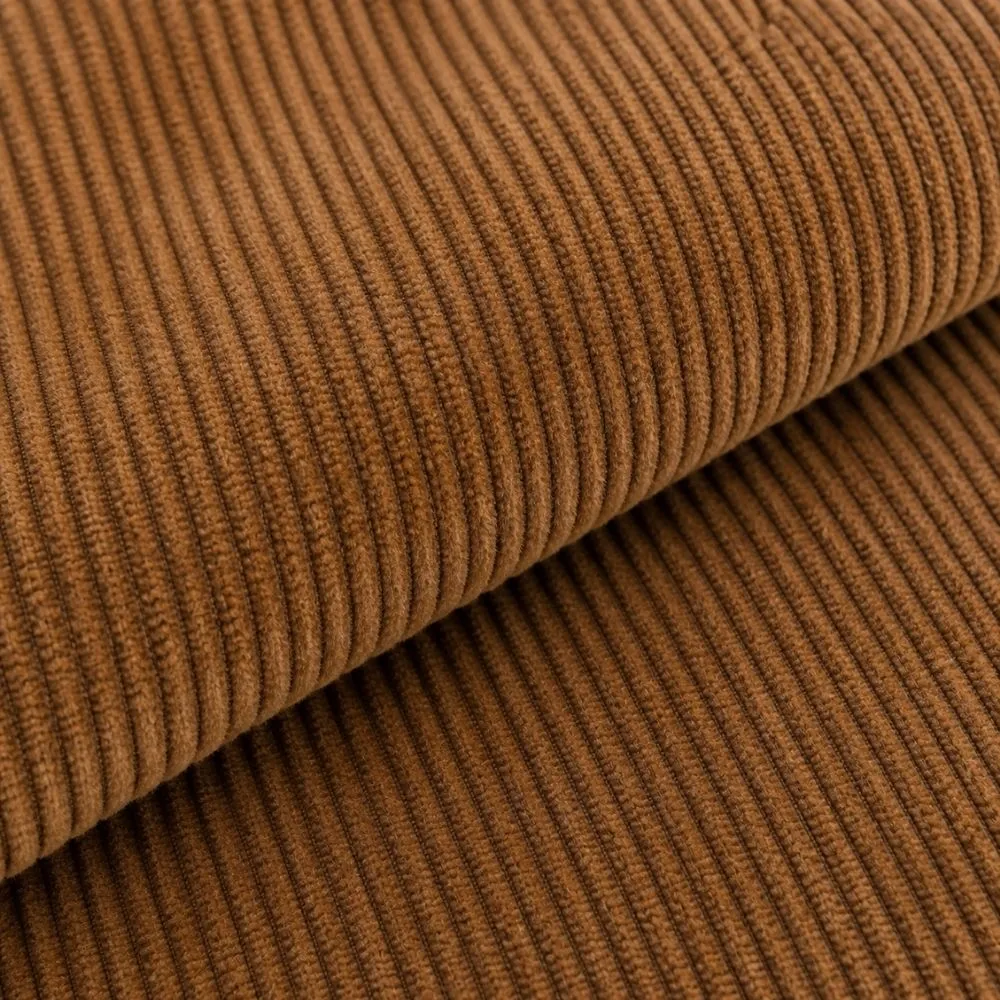
Corduroy is a woven fabric characterised by parallel ridges, called wales, created by cutting extra weft threads after weaving to form raised, fuzzy cords. Unlike a flat weave, corduroy's pile construction gives it texture, warmth, and a distinctive visual depth that has made it a recurring staple in both casualwear and tailoring.
Is corduroy cotton? Traditionally, yes — most corduroy is 100% cotton, prized for its softness and breathability. Modern corduroy material often blends cotton with polyester or spandex for added durability, stretch, or a lower price point, so the honest answer to "what is corduroy fabric made of" depends on the specific garment and its label.
How Is Corduroy Made?
Corduroy is made by weaving a base fabric with extra sets of weft yarns, which are then cut to create loose fibre loops on the surface. Brushing and shearing these loops produces the fabric's signature raised cords. The number of these cords per inch — known as the wale count — determines whether a corduroy reads as a fine pinwale or a chunky wide wale.
Understanding Corduroy Wale Count
Wale count is the single most useful spec for understanding any corduroy garment, since it determines both how the fabric looks and how it performs. A higher wale count means finer, more numerous ridges packed closer together; a lower wale count means fewer, wider ridges with a chunkier, more textured look.
| Wale Type | Wales Per Inch | Typical Use |
|---|---|---|
| Pinwale (Needlecord) | 16–23 | Shirts, skirts, lightweight blazers |
| Standard Wale | 10–12 | Trousers, casual jackets |
| Wide Wale | 3–6 | Statement jackets, outerwear, overalls |
| Feather Wale | 21+ | Fine shirting, dresses |
Is Corduroy Warm? Seasonal Wearability
Yes — corduroy's raised pile traps air close to the body, making it noticeably warmer than a flat cotton weave of the same weight. This is exactly why corduroy pants and jackets are associated with autumn and winter wardrobes rather than midsummer.
Can you wear corduroy in summer? Lightweight pinwale corduroy in a breathable cotton blend can work in early summer or in air-conditioned settings, but heavier wide wale corduroy will feel noticeably warm in genuine summer heat. Corduroy generally transitions best into spring and fall, when its warmth becomes an asset rather than a drawback.
A Brief History — When Was Corduroy Invented?
Corduroy's ribbed-pile weaving technique traces back to fustian fabrics used in ancient Egypt, though the fabric as we recognise it today developed in England during the 18th century, later becoming strongly associated with workwear durability. Corduroy's biggest popularity peaks came in the 1970s, when wide wale corduroy jackets, trousers, and suits became a defining silhouette of the decade.
A different kind of "corduroy road": outside of fabric, "corduroy road" refers to a road surface built from logs laid perpendicular to the direction of travel — named for its resemblance to corduroy fabric's ridged texture. It's an unrelated construction term, not a clothing reference, but worth clearing up since both share the same name.
Types of Corduroy Garments
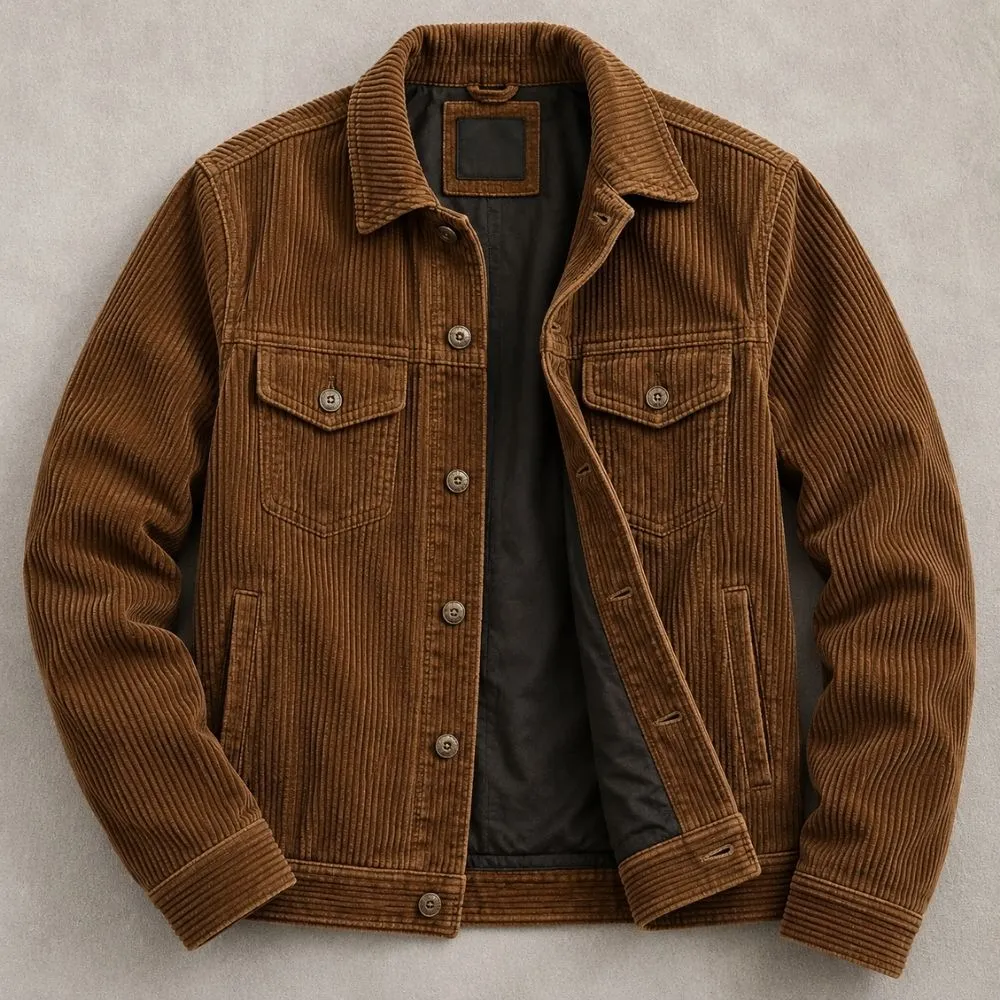
Corduroy shows up across almost every garment category. The corduroy jacket remains the most iconic example, often paired with elbow patches and a wide wale finish, while corduroy pants and corduroy trousers are a wardrobe staple across both men's and women's fashion. Corduroy shirts, corduroy skirts, corduroy blazers, corduroy shorts, and even corduroy overalls all use the same base fabric in different cuts and weights.
A corduroy suit — jacket and trousers cut from matching wide wale corduroy — is a distinctly retro, texture-forward alternative to a traditional wool suit, popular for its relaxed but still put-together look. On the accessories side, corduroy also appears frequently in caps, hats, and bags, where its texture adds visual interest to otherwise simple shapes.

Is Corduroy Business Casual? A Styling Guide
Corduroy pants are widely accepted as business casual, particularly in a neutral colour like brown, olive, navy, or khaki, paired with a button-down shirt or a knit sweater. A corduroy blazer can also read as business casual when styled over a plain shirt, especially in a fine pinwale finish rather than a chunky wide wale.
What to wear with corduroy pants comes down to keeping the rest of the outfit simple, since the fabric's texture already does visual work on its own — a plain knit, a crisp shirt, or a solid-colour jacket all pair well. For shoes, leather boots, loafers, or clean sneakers all complement corduroy's casual-but-put- together character.
Corduroy Care Guide — Washing, Cleaning & Ironing
Does corduroy shrink? Cotton corduroy can shrink slightly on its first wash, which is why checking the care label and washing in cool water is worth the extra minute. Can you wash corduroy in a machine — yes, most corduroy garments are machine washable on a gentle, cool cycle, though wide wale corduroy holds up best when turned inside out first to protect the pile.
How to iron corduroy without flattening its texture: always iron corduroy inside out, or place a thin cloth between the iron and the fabric, using a low-to-medium heat setting. Steaming is often a gentler alternative to ironing corduroy pants or a corduroy jacket, since it removes wrinkles without direct pressure on the pile.
Corduroy upholstery — including a corduroy sofa or corduroy couch — generally needs a soft brush and fabric-safe upholstery cleaner rather than a washing machine, and spot-testing any cleaner on a hidden area first is always worth doing before treating a visible stain.
Corduroy vs Velvet — What's the Difference?
Both fabrics use a cut-pile construction, but corduroy's pile forms distinct ridged wales, while velvet's pile is dense and uniform across the entire surface with no visible ridges. Velvet tends to read as more formal and has a smoother drape, while corduroy's texture leans more casual and structured — a useful distinction when a design brief calls for "a corduroy feel" rather than velvet's smoother finish.