What Is a Polo Shirt?
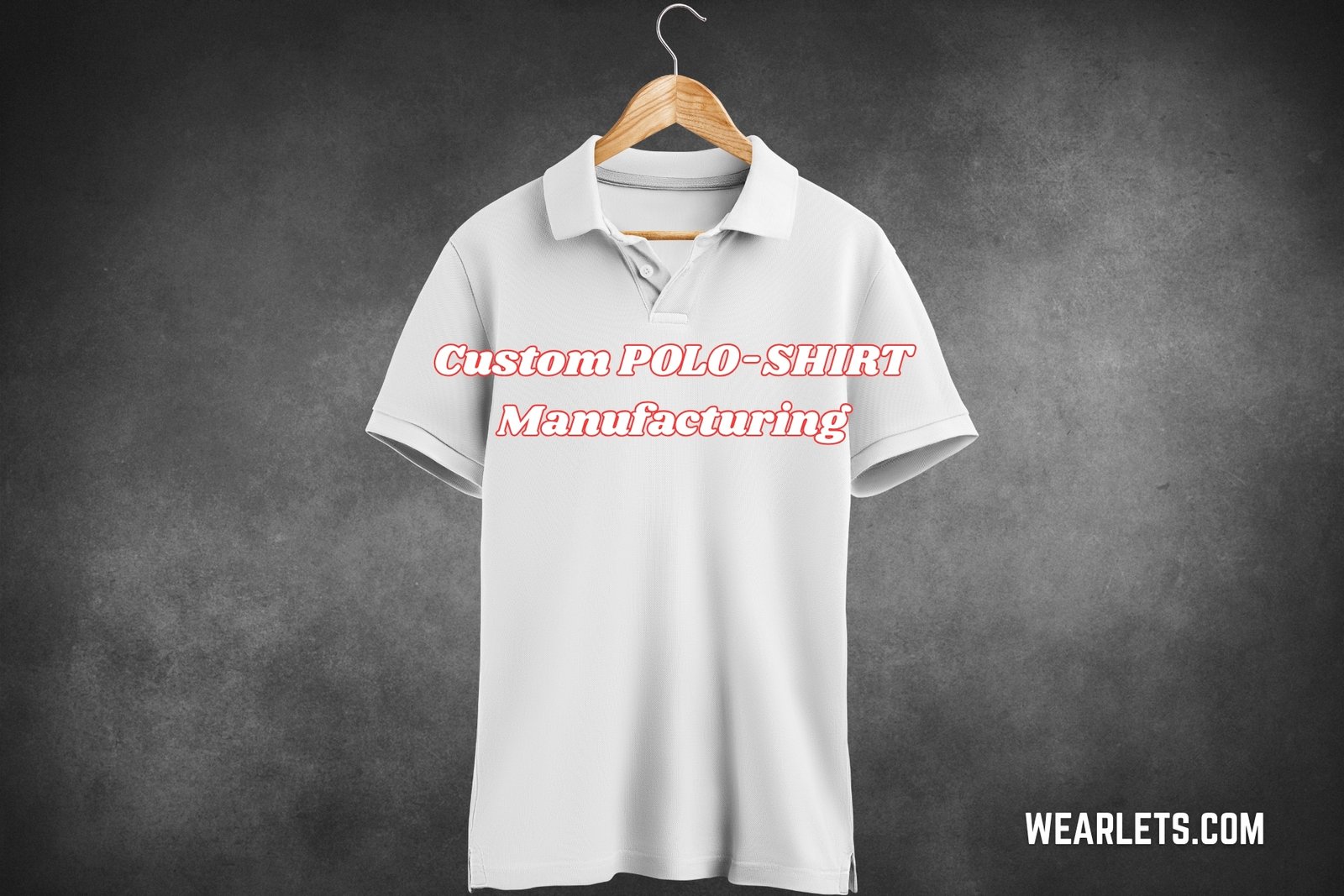
A polo shirt — also known as a golf shirt, tennis shirt, or collared shirt — is a knitted, collared garment featuring a short button placket, short or long sleeves, and a hemmed bottom. It bridges the gap between casual and smart, making it arguably the most versatile piece of clothing ever designed.
A polo shirt is a short-sleeved, knitted collar shirt made predominantly from cotton piqué or performance polyester, featuring a 2–3 button placket at the neckline — designed to bridge the gap between casual t-shirts and formal collared shirts, suitable for sport, corporate settings, and everyday smart-casual wear.
A Century-Long Fashion Icon
The polo shirt is one of the most commercially successful garments in fashion history. From René Lacoste's original tennis shirt to Ralph Lauren's iconic Polo line, the silhouette has remained remarkably consistent since the 1920s — while, notably, continuously adapting to new fabrics, fits, and functions.
Key Features That Define a Polo Shirt
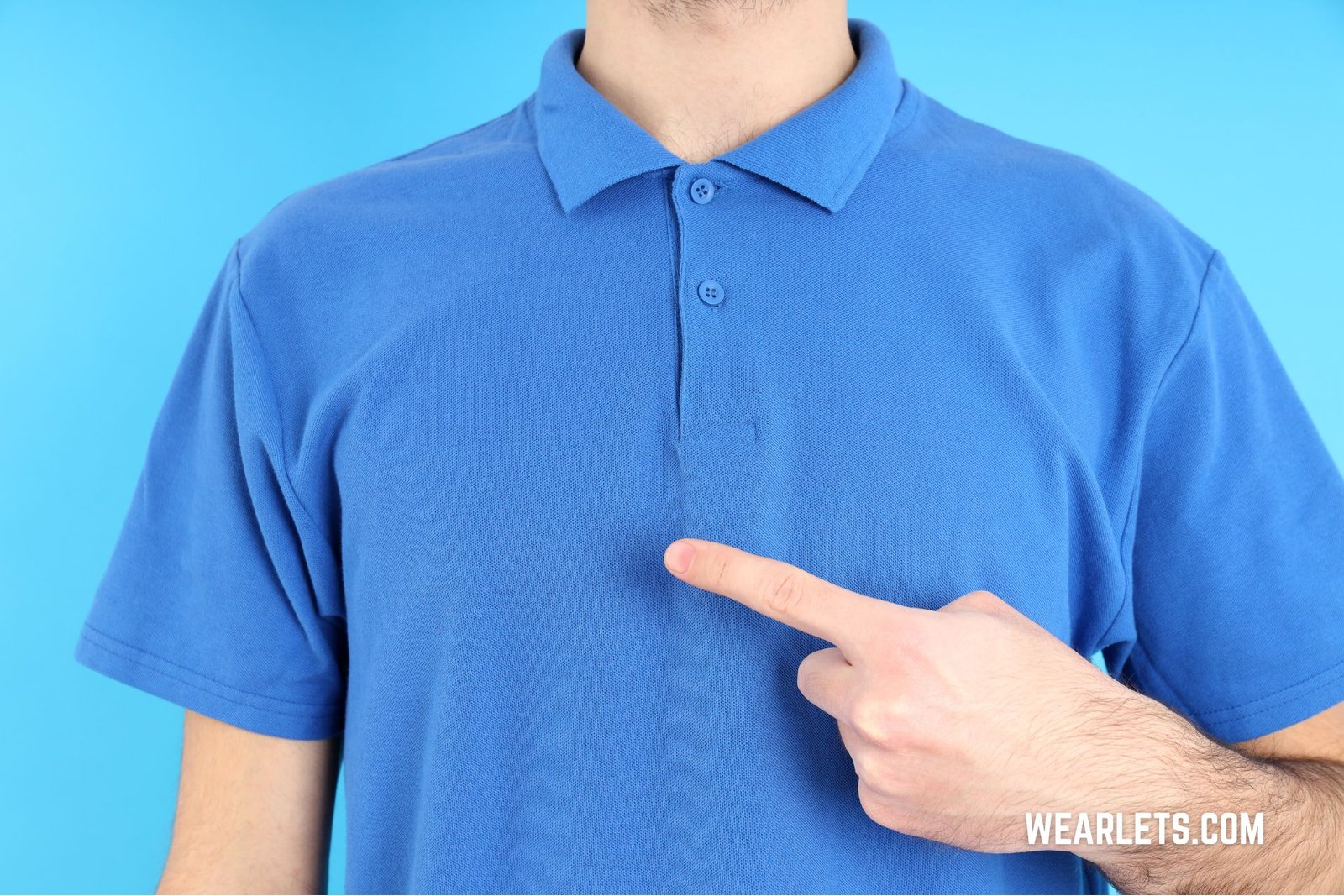
Unlike a dress shirt, which is woven and buttoned fully down the front, the polo shirt's defining features are its knitted construction (giving it stretch and comfort), its ribbed collar (which can be popped or laid flat), and its short front placket with 2 or 3 buttons that regulates ventilation. As a result, the polo shirt offers a level of breathability and ease of movement that traditional shirts simply cannot match.
The Rich History of the Polo Shirt_What Is a Polo Shirt
Few garments carry as storied a history as the polo shirt. What began as sporting attire on muddy polo fields and grass tennis courts eventually evolved into a global fashion symbol worn by presidents, athletes, and everyday people alike. In fact, no other casual garment has bridged the worlds of sport, corporate wear, and high fashion quite so successfully.
Polo Players & Button Collars
British polo players in colonial India wore long-sleeved button-collar shirts to keep their collars from flapping at speed. These early "polo shirts" were far heavier than today's versions, but they established the concept of a collared sport shirt built for movement.
René Lacoste Creates the Modern Polo
French tennis champion René Lacoste designed a short-sleeved, soft-collar piqué cotton shirt for playing tennis — consequently creating the blueprint for every polo shirt since. He then began selling it commercially in 1933 under the Lacoste brand with the now-iconic crocodile logo.
Brooks Brothers Goes Mainstream
John Brooks visited British polo matches and noticed players had buttons on their collars to stop them flapping. He subsequently brought this idea to America, creating the button-down polo collar that became synonymous with Ivy League and preppy fashion.
Ralph Lauren Redefines the Polo
Ralph Lauren launched his iconic Polo line, transforming the polo shirt from a sports garment into a lifestyle symbol. As a result, the embroidered polo player logo became one of the most recognisable brand marks in fashion history.
From Golf Courses to Corporate Offices
The polo shirt transcended sport to become a staple of corporate uniforms, golf apparel, school dress codes, and fashion collections worldwide. Furthermore, performance fabrics like moisture-wicking polyester expanded its function further into technical sportswear, making it more relevant today than ever before.
Anatomy of a Polo Shirt
Understanding the anatomy of a polo shirt helps you specify exactly what you need — whether you are ordering custom polo shirts for your brand or, alternatively, selecting the right fit for your wardrobe.
The Collar
A ribbed, knitted collar worn up or flat. Options include standard ribbed, self-fabric (smooth), or banded collar. The collar is a polo's most defining visual element.
The Placket
A short front opening with 2 or 3 buttons (sometimes 4 for longer styles). Allows ventilation and creates the semi-formal look. Button materials range from plastic to mother-of-pearl.
The Sleeves
Most polo shirts have short sleeves with ribbed cuffs. Long-sleeve variants suit cooler seasons. Raglan sleeves (extending to the collar) are popular in sportswear polo shirts.
The Body
Made from knitted fabric — most commonly cotton piqué. The body can be slim fit, regular fit, or relaxed fit depending on the target market and style direction.
The Hem
Polo shirts have a straight or slightly curved hem, usually with side vents for ease of movement. The hem determines whether a polo can be tucked in or worn untucked.
Branding
Custom polo shirts feature logos via embroidery, woven badges, heat transfers, or screen printing. Private label options include custom neck labels and woven tags.
Types of Polo Shirts
The polo shirt family is broader than most people realise. Here are the main styles across sports, fashion, and corporate settings.
1. Classic Piqué Polo
The original and most iconic. Made from cotton piqué with its characteristic waffle texture — breathable, slightly structured, ideal for smart-casual and corporate use. The Lacoste L.12.12 and Ralph Lauren Polo are, for example, the gold standards of this style.
2. Performance / Dry-Fit Polo
Made from moisture-wicking polyester or polyester-spandex blends. Engineered for sport — they wick sweat away from skin, dry fast, and offer stretch for freedom of movement. As a result, they are the standard choice in golf, cricket, and tennis apparel.
3. Long-Sleeve Polo
Same construction as a classic polo but with full-length sleeves. Ideal for cooler seasons, layering under a blazer, and UV-protection in outdoor sports. In addition, they are popular in golf, sailing, and equestrian apparel.
4. Slim-Fit Polo
Tailored closer to the body with narrower sleeves, higher armhole, and tapered waist. Popular in fashion-forward contexts. For instance, brands like Fred Perry and Hackett London are particularly well known for their slim-cut polos.
5. Rugby Polo
A heavier, sturdier variant with a full-length button placket and reinforced collar. Made from thicker cotton or cotton-polyester blends, rugby polos are durable and have a distinctly sporty, rugged aesthetic.
6. Corporate / Workwear Polo
Designed for uniformity, branding, and professional appearance. Additionally, Usually cotton-polyester blends for durability and easy care. These are therefore the most common type ordered in bulk from custom polo shirt manufacturers like Wearlets.
7. Golf Polo
A performance polo with moisture-wicking properties, UPF sun protection, and a longer back hem that stays tucked during a golf swing. Usually solid colours or subtle patterns like micro-stripes or bird eye mesh textures.
Polo Shirt Fabrics & Wearlets Manufacturing Options
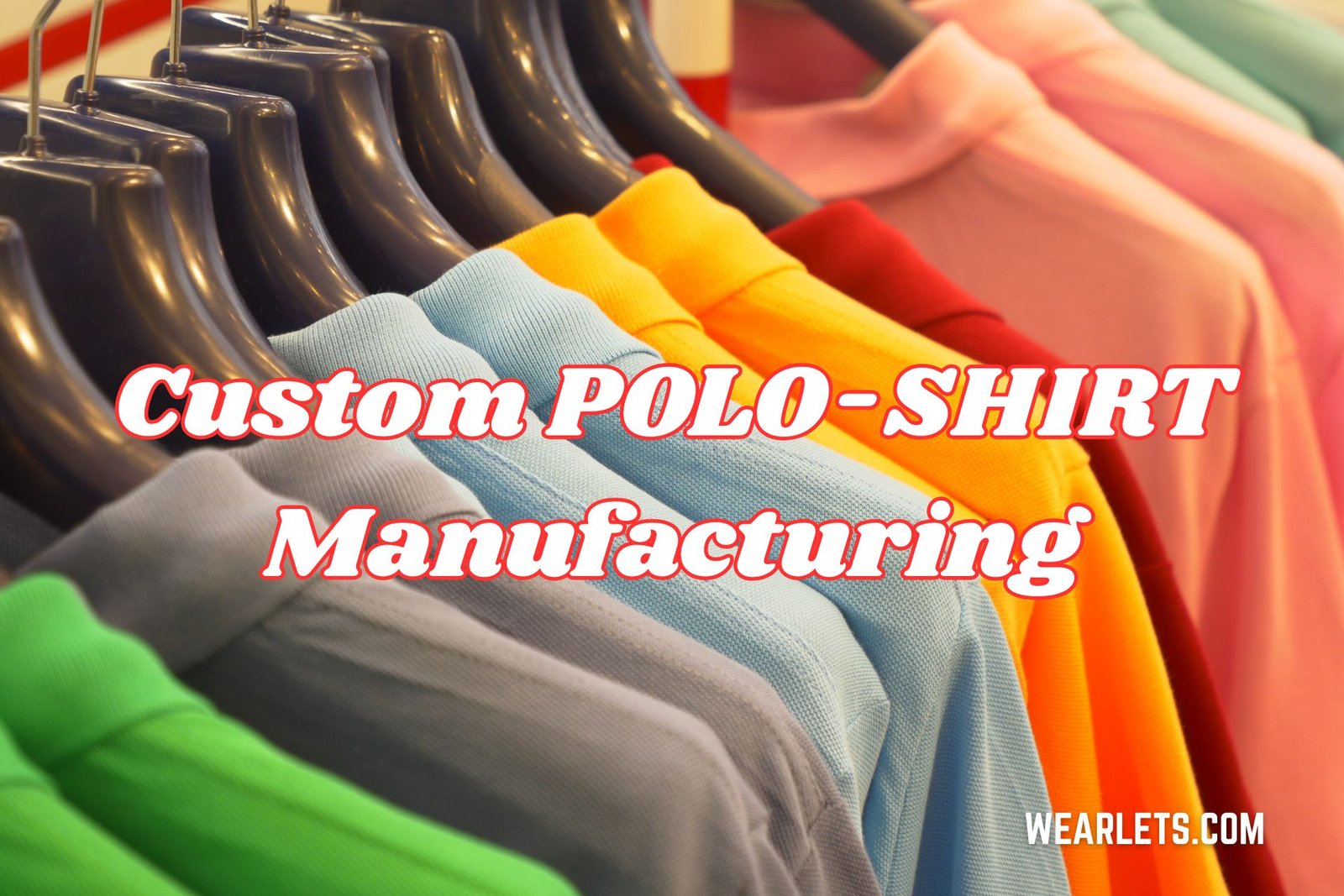
At Wearlets, we manufacture custom polo shirts in a comprehensive range of performance and classic fabrics. Consequently, every fabric below is available for OEM and private label production — select the one that best matches your brand's positioning and end-use requirements.
💡 Wearlets Manufacturing Note: All fabrics below are available in custom GSM, Pantone-matched colours, and your choice of embroidery, screen printing, sublimation, or heat-transfer branding. MOQ: 100 pcs per colour/style. We ship to the USA, UK, Europe & beyond.
Natural & Blended Fabric Options
Performance & Mesh Polyester Options
🌱 Eco-Friendly Option Available: Wearlets also manufactures polo shirts in organic cotton and recycled polyester for brands committed to sustainable apparel production. Ask our team about eco-certified fabric options.
Polo Shirt vs T-Shirt vs Dress Shirt
Understanding where a polo shirt sits in the shirt spectrum helps you make better choices for your wardrobe — or, equally, for your brand's uniform programme. In particular, the differences in construction, formality, and care requirements are worth knowing before you buy or order in bulk.
| Feature | Polo Shirt | T-Shirt | Dress Shirt |
|---|---|---|---|
| Collar | Ribbed knit ✔ | No collar ✗ | Structured woven ✔ |
| Fabric Type | Knitted piqué / polyester mesh | Knitted jersey cotton | Woven poplin / twill |
| Buttons | 2–3 button placket | None | Full-length button front |
| Formality | Smart Casual | Casual | Formal |
| Worn With | Chinos, trousers, jeans, sports shorts | Jeans, shorts, joggers | Suit trousers, tie, blazer |
| Ideal For | Golf, corporate, smart-casual events | Casual everyday, gym, beach | Meetings, weddings, formal events |
| Care | Machine wash 30–40°C | Machine wash up to 60°C | Machine wash or dry clean |
| Ironing | Light ironing or tumble dry | Minimal or none needed | Essential — requires pressing |
How to Wear a Polo Shirt — Styling Guide
The polo shirt's smart-casual positioning makes it one of the most adaptable garments in any wardrobe. Furthermore, its ability to dress up or down with equal ease sets it apart from almost every other top. Here's how to wear a polo shirt across different occasions and dress codes.
Polo + Chinos
The classic combination. For example, tuck a slim or regular-fit polo into tailored chinos, add a leather belt and loafers or clean white sneakers. Works for office-casual, client meetings, and smart dinners.
Polo + Jeans
Meanwhile, wear untucked over slim or straight jeans with clean trainers or boat shoes. A relaxed-fit polo in a neutral or pastel colour keeps this look effortless and stylish without being overdressed.
Polo + Blazer
Additionally, layer a slim-fit polo under a structured blazer for a sharper look without a tie. Pair with tailored trousers or dark chinos. This combination works well in creative industries and client-facing roles.
Performance Polo + Sports Shorts
Furthermore, a dry-fit or bird eye mesh polo paired with golf trousers or sports shorts is the standard golf course outfit. Moisture-wicking fabrics keep you cool through 18 holes. Tuck in for most club dress codes.
Embroidered Polo + Trousers
In particular, for corporate and hospitality environments, an embroidered polo shirt in brand colours worn with tailored trousers or a pencil skirt projects a professional, approachable image that's comfortable all day.
Polo + Joggers / Shorts
Meanwhile, contemporary streetwear styling pairs an oversized or boxy-fit polo with tailored joggers or Bermuda shorts. Popularised by brands like Lacoste and Fred Perry in streetwear-influenced styling.
Professional vs Casual Polo Styling
💡 Styling Tip: The collar is the polo's defining feature — keep it flat and neat for corporate and smart-casual occasions. Popping the collar has a sporty aesthetic that works in streetwear but not in professional settings.
Polo Shirt Size Guide — How Should a Polo Shirt Fit?
Getting the right polo shirt fit makes the difference between looking sharp and looking sloppy. Therefore, it is worth taking a few measurements before ordering. Here's how to measure for the perfect polo shirt and what to expect from each fit type.
Key Fit Points
Shoulders: The shoulder seam should sit exactly at the edge of your shoulder — not drooping onto your arm (too large) or pulling toward your neck (too small).
Chest: You should be able to pinch 2–3 inches of fabric on either side in a regular fit, or 1–1.5 inches in a slim fit. No pulling across the chest.
Sleeves: Short sleeves should end at mid-bicep. Sleeves that extend past the elbow or ride up toward the shoulder are the wrong fit.
Length: Untucked, the hem should cover your waistband by 2–3 inches. If you intend to tuck in, size up one size for comfortable coverage.
Men's Polo Shirt Size Chart (Standard International)
| Size | Chest (inches) | Chest (cm) | Waist (inches) | Collar (inches) |
|---|---|---|---|---|
| XS | 32–34 | 81–86 | 28–30 | 13–13.5 |
| S | 35–37 | 89–94 | 30–32 | 14–14.5 |
| M | 38–40 | 96–101 | 33–35 | 15–15.5 |
| L | 41–43 | 104–109 | 36–38 | 16–16.5 |
| XL | 44–46 | 112–117 | 39–41 | 17–17.5 |
| 2XL | 47–49 | 119–124 | 42–44 | 18–18.5 |
| 3XL | 50–52 | 127–132 | 45–47 | 19–19.5 |
⚠️ Custom sizing available: Wearlets manufactures polo shirts from XS to 5XL, including women's and youth sizing. For bulk orders, we can produce to fully custom fit specifications — providing a fit sample for approval before production begins.
Slim Fit vs Regular Fit vs Relaxed Fit
Understanding Different Polo Fits
Slim Fit
Tailored close to the body — narrower chest, tapered waist, shorter length. Best for leaner builds or fashion-forward styling. Not ideal for formal tucked-in wear or athletic use requiring freedom of movement.
Regular Fit
The classic polo fit — comfortable across the chest and body with moderate ease. Works for most builds and occasions, from corporate uniforms to casual weekend wear. The most common fit ordered in bulk corporate polo shirts.
Relaxed Fit
A looser, more generous cut with a longer body and wider sleeves. Ideal for activewear and oversized streetwear styling. Also preferred for larger builds where a regular fit may feel restrictive.
Who Wears Polo Shirts? Industry Use Cases
The polo shirt's versatility is unmatched — here's how different industries rely on it across the globe. Indeed, few garments serve such a wide range of professional and social contexts simultaneously.
Corporate, Sports & Fashion Applications
Golf & Country Clubs
The polo shirt's spiritual home. Furthermore, Club dress codes almost universally require collared shirts. Bird eye mesh and dry-fit polo fabrics are the norm on golf courses worldwide.
Corporate Uniforms
Additionally, hotels, airlines, retail staff, tech companies, and hospitality businesses use embroidered polo shirts as their uniform solution — professional, comfortable, and easy to brand.
Sports Teams
Similarly, football clubs, cricket teams, tennis academies, and gym brands use custom polo shirts for coaching staff, training, and team identity — often with sublimation or screen-printed designs.
Schools & Universities
In fact, polo shirts are a common school uniform choice — smarter than t-shirts while remaining comfortable and durable for active young people and sports societies.
Fashion & Streetwear
Moreover, from Ralph Lauren to Fred Perry to contemporary streetwear, the polo shirt is a global fashion staple — styled preppy, sporty, or luxurious depending on the brand aesthetic.
Healthcare & Services
Meanwhile, nurses, paramedics, security teams, and service industry professionals wear polo shirts for durability, easy washing, and the ability to carry embroidered logos and name badges cleanly.
Why Businesses Prefer Polo Shirts
How to Care for a Polo Shirt
Proper care dramatically extends a polo shirt's life — preserving its texture, colour vibrancy, and shape through hundreds of washes. In particular, the care requirements differ significantly between cotton and performance polyester polo shirts.
⚠️ Always check the care label first — washing instructions vary significantly between 100% cotton, cotton-poly blends, and performance polyester polo shirts. This is especially important for garments with embroidery or heat-transfer branding.
Washing
Turn polo shirts inside-out before washing to protect the outer fabric and any embroidered logos. Use a gentle cycle at 30–40°C for cotton and cotton-blend polo shirts, and cool water (30°C or cold) for performance polyester polo shirts. In addition, avoid bleach, which breaks down fibres and fades colour over time.
Drying
Air-dry polo shirts flat or on a hanger to maintain their shape. Tumble drying on a low setting is acceptable for most cotton polo shirts; however, avoid high heat, which causes shrinkage and collar distortion.
Never wring a polo shirt — this stretches the collar out of shape permanently. Instead, gently press out excess water before hanging or laying flat to dry.
you are reading What Is a Polo Shirt?
Ironing
Iron polo shirts on a medium setting while slightly damp for the best results. Use a pressing cloth over embroidered logos to prevent heat damage. Moreover, most modern performance polyester polo shirts require little to no ironing at all.
Storing
Fold polo shirts neatly or hang them on rounded hangers (not wire) to maintain collar shape. Furthermore, store in a cool, dry place away from direct sunlight to prevent colour fading — particularly important for vibrant custom-colour or sublimation-printed polo shirts.
Custom Polo Shirt Manufacturing with Wearlets
Looking to manufacture custom polo shirts for your brand, sports team, or corporate uniform programme? In that case, Wearlets is a trusted OEM and private label polo shirt manufacturer serving brands across the USA and Europe.
End-to-End Production & Quality Assurance
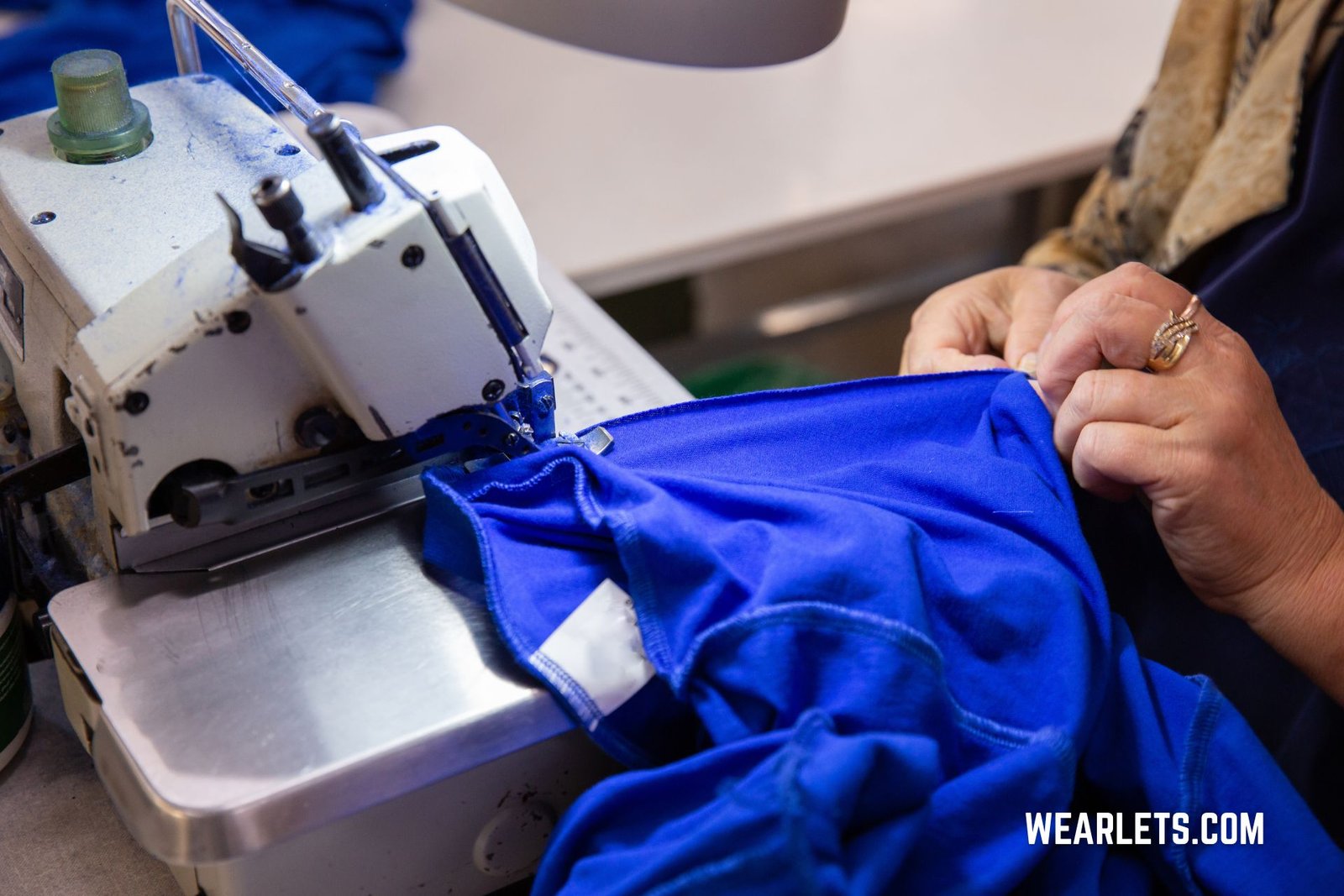
Our manufacturing capabilities cover every stage of production — from initial design consultation and fabric sourcing, through precision cutting, embroidery, and printing. As a result, you receive a seamless, fully managed service from concept to finished garment.
Furthermore, we conduct multi-stage quality inspection throughout production, and every custom polo shirt is manufactured to international quality standards before export-ready packaging is applied.
Why Brands Choose Wearlets
Full Customization
Choose your fabric, fit, collar style, button type, GSM, Pantone-matched colours, and branding method — embroidery, screen printing, sublimation, or woven badges.
Low MOQ — 100 pcs
Minimum order quantity of just 100 pieces per colour/style — ideal for startups, sports teams, and small brands launching their first custom polo collection.
Private Label
Full private label service: custom neck labels, woven tags, hang tags, and branded packaging. Launch your polo shirt line under your own brand name.
All Sizes — XS to 5XL
Men's, Women's, Unisex, and Youth sizing. We follow international size standards and can accommodate fully custom fit specifications for your brand.
Global Export
Export-ready manufacturing for the USA, UK, Europe, Australia, and beyond. Full compliance documentation for international retail and customs clearance.
Quality Assured
Multi-stage quality control at every production step — fabric inspection, in-line checks during sewing, and final pre-shipment inspection before packing.
🔗 Explore More Wearlets Manufacturing Services
Ready to Create Your Custom Polo Shirts?
Join hundreds of brands across the USA and Europe who manufacture their custom polo shirts with Wearlets. Low MOQ. Premium quality. Private label ready.
Frequently Asked Questions About Polo Shirts
Everything you need to know about polo shirts — from basic definitions to fabric specs, sizing, styling, and custom manufacturing details.
Common Questions About Polo Shirts
Polo Shirt Basics & Manufacturing Questions
A polo shirt is a collared shirt made from knitted fabric. In addition, most polo shirts use cotton piqué or performance polyester for comfort and durability.
They feature a placket with 2–3 buttons, short or long sleeves, and a hemmed bottom. Consequently, polo shirts bridge the gap between casual t-shirts and formal dress shirts.
A polo shirt has a ribbed collar and a button placket — placing it in the smart-casual category. A t-shirt, on the other hand, has no collar and no buttons, made from plain jersey cotton — firmly casual. Polo shirts are therefore suitable for golf, corporate events, and smart-casual settings where t-shirts would be too informal.
Polo shirts are manufactured in a wide range of fabrics. Furthermore,: 100% cotton, 70/30 cotton-polyester blend, interlock polyester, eyelet mesh polyester, pindot mesh polyester, bird eye mesh polyester, honeycomb polyester, dry-fit profit polyester, and air mesh polyester. Wearlets manufactures all of these with full customization options.
The modern polo shirt was invented by French tennis champion René Lacoste in 1926. He designed a breathable, short-sleeved piqué cotton shirt specifically for sport.
Consequently, Lacoste launched the design commercially in 1933 under the Lacoste brand with the iconic crocodile logo. John Brooks of Brooks Brothers later popularised the button-down polo collar in the USA.
Polo shirts can be worn untucked with chinos or jeans. Additionally, for smart-casual style, tucked into trousers for a more formal look, or layered under a blazer or lightweight jacket. The collar should be worn flat and neat for professional settings. Pair with loafers or clean trainers for casual occasions, or dress shoes when worn with trousers in a business context.
A polo shirt should have shoulder seams sitting at the edge of your shoulders, sleeves ending at mid-bicep, and a body length covering your waistband by 2–3 inches when worn untucked. In a regular fit you should be able to pinch 2–3 inches of fabric on either side of the chest. Slim fit polos sit closer to the torso — size up if you prefer a relaxed look or plan to tuck in.
A bird eye mesh polo is made from 100% polyester with a distinctive open-knit pattern — tiny symmetrical holes resembling a bird's eye — creating exceptional breathability, superior moisture-wicking, and a lightweight feel. It's one of the most popular performance polo fabrics for golf, tennis, and activewear brands. Wearlets manufactures bird eye mesh polo shirts with full custom branding.
Pindot mesh has a very fine, closely-spaced dot texture that creates subtle visual interest and moderate breathability — ideal for corporate and golf polo shirts. Eyelet mesh, by contrast, has larger punched holes (eyelets) for maximum airflow — better suited to high-intensity sports or warm-climate apparel. Both are 100% polyester and moisture-wicking.
Polo shirts typically range from 180 GSM to 280 GSM. Lighter polo shirts (180–200 GSM) are ideal for athletic and warm-climate use. Heavier polo shirts (220–280 GSM), on the other hand, provide more structure and are preferred for corporate or premium fashion polo shirts. Wearlets offers customisable GSM across all fabric types.
A piqué polo shirt is made from cotton piqué — a fabric with a distinctive waffle or honeycomb surface texture. This weave makes the fabric more breathable, durable, and resistant to creasing than plain jersey cotton. Furthermore, honeycomb polyester replicates this piqué texture in a fully synthetic performance fabric, available at Wearlets.
Yes — polo shirts are one of the most popular corporate uniform choices. They are professional, comfortable, durable, and easy to brand with embroidered logos. Consequently, Wearlets manufactures corporate polo shirts in cotton-poly blends and honeycomb polyester for hospitality, retail, logistics, healthcare, and tech companies.
Yes. Wearlets offers OEM and private label custom polo shirt manufacturing with a minimum order quantity of 100 pieces per colour/style. We serve fashion brands, sports teams, corporate clients, and retailers across the USA, UK, and Europe. Contact us for a custom quote tailored to your fabric, design, and quantity requirements.
Ready to Create Your Custom Polo Shirts?
Join hundreds of brands across the USA and Europe who manufacture their custom polo shirts with Wearlets. Low MOQ. Premium quality. Private label ready.
Frequently Asked Questions About Polo Shirts
Everything you need to know about polo shirts — from basic definitions to fabric specs, sizing, styling, and custom manufacturing details.
Common Questions About Polo Shirts
A polo shirt is a collared shirt made from knitted fabric. In addition, most polo shirts use cotton piqué or performance polyester for comfort and durability.
They feature a placket with 2–3 buttons, short or long sleeves, and a hemmed bottom. Consequently, polo shirts bridge the gap between casual t-shirts and formal dress shirts.
A polo shirt has a ribbed collar and a button placket — placing it in the smart-casual category. A t-shirt, on the other hand, has no collar and no buttons, made from plain jersey cotton — firmly casual. Polo shirts are therefore suitable for golf, corporate events, and smart-casual settings where t-shirts would be too informal.
Polo shirts are manufactured in a wide range of fabrics. Furthermore,: 100% cotton, 70/30 cotton-polyester blend, interlock polyester, eyelet mesh polyester, pindot mesh polyester, bird eye mesh polyester, honeycomb polyester, dry-fit profit polyester, and air mesh polyester. Wearlets manufactures all of these with full customization options.
The modern polo shirt was invented by French tennis champion René Lacoste in 1926. He designed a breathable, short-sleeved piqué cotton shirt specifically for sport.
Consequently, Lacoste launched the design commercially in 1933 under the Lacoste brand with the iconic crocodile logo. John Brooks of Brooks Brothers later popularised the button-down polo collar in the USA.
Polo shirts can be worn untucked with chinos or jeans. Additionally, for smart-casual style, tucked into trousers for a more formal look, or layered under a blazer or lightweight jacket. The collar should be worn flat and neat for professional settings. Pair with loafers or clean trainers for casual occasions, or dress shoes when worn with trousers in a business context.
A polo shirt should have shoulder seams sitting at the edge of your shoulders, sleeves ending at mid-bicep, and a body length covering your waistband by 2–3 inches when worn untucked. In a regular fit you should be able to pinch 2–3 inches of fabric on either side of the chest. Slim fit polos sit closer to the torso — size up if you prefer a relaxed look or plan to tuck in.
A bird eye mesh polo is made from 100% polyester with a distinctive open-knit pattern — tiny symmetrical holes resembling a bird's eye — creating exceptional breathability, superior moisture-wicking, and a lightweight feel. It's one of the most popular performance polo fabrics for golf, tennis, and activewear brands. Wearlets manufactures bird eye mesh polo shirts with full custom branding.
Pindot mesh has a very fine, closely-spaced dot texture that creates subtle visual interest and moderate breathability — ideal for corporate and golf polo shirts. Eyelet mesh, by contrast, has larger punched holes (eyelets) for maximum airflow — better suited to high-intensity sports or warm-climate apparel. Both are 100% polyester and moisture-wicking.
Polo shirts typically range from 180 GSM to 280 GSM. Lighter polo shirts (180–200 GSM) are ideal for athletic and warm-climate use. Heavier polo shirts (220–280 GSM), on the other hand, provide more structure and are preferred for corporate or premium fashion polo shirts. Wearlets offers customisable GSM across all fabric types.
A piqué polo shirt is made from cotton piqué — a fabric with a distinctive waffle or honeycomb surface texture. This weave makes the fabric more breathable, durable, and resistant to creasing than plain jersey cotton. Furthermore, honeycomb polyester replicates this piqué texture in a fully synthetic performance fabric, available at Wearlets.
Yes — polo shirts are one of the most popular corporate uniform choices. They are professional, comfortable, durable, and easy to brand with embroidered logos. Consequently, Wearlets manufactures corporate polo shirts in cotton-poly blends and honeycomb polyester for hospitality, retail, logistics, healthcare, and tech companies.
Yes. Wearlets offers OEM and private label custom polo shirt manufacturing with a minimum order quantity of 100 pieces per colour/style. We serve fashion brands, sports teams, corporate clients, and retailers across the USA, UK, and Europe. Contact us for a custom quote tailored to your fabric, design, and quantity requirements.