 WEARLETS

What Is Rayon? A Complete Guide to This Fabric
A plain-language breakdown of what rayon is made of, how it differs from viscose and modal, and where it earns its place in a clothing line.
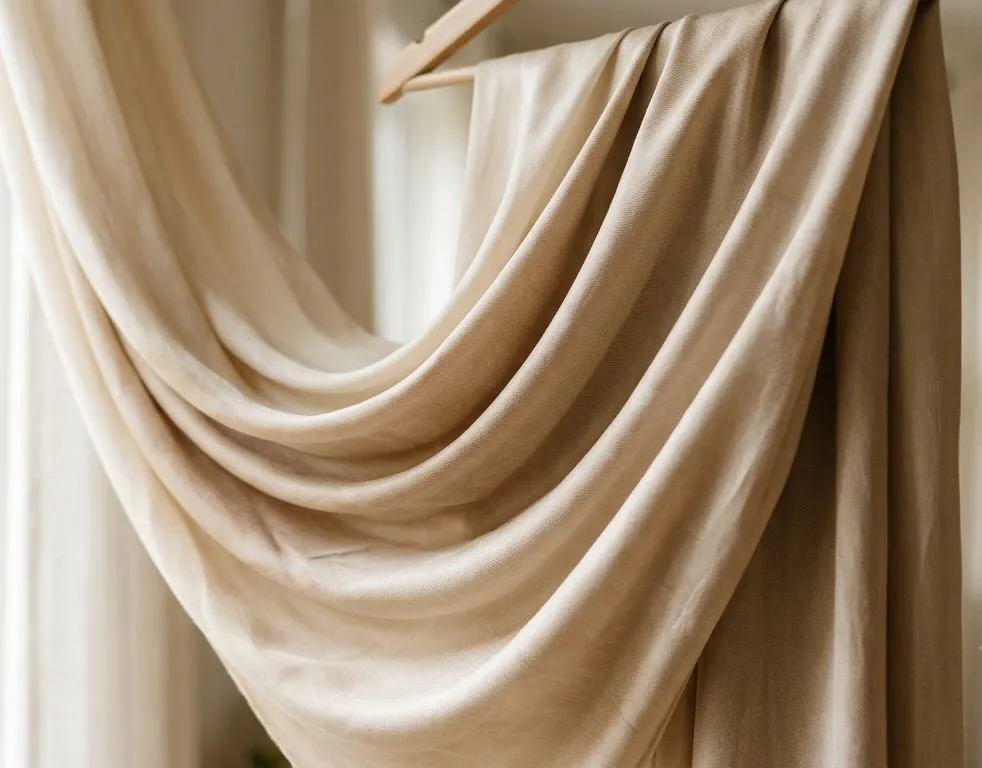
If you've ever checked a clothing label and seen "rayon" and wondered how that's different from the "viscose" you've also seen on labels — you're not imagining things. They're closely related, and untangling exactly how is the most useful thing this guide can do for you.
This post covers what rayon is actually made of, the different types of rayon fabric, how it compares to cotton and polyester, and how to care for it.
What Is Rayon Made Of?
Rayon is a manufactured fiber made from regenerated cellulose — plant material, most commonly wood pulp, that's chemically processed and reformed into fiber. That makes rayon neither fully natural (like cotton) nor fully synthetic (like polyester, which comes from petroleum). It sits in its own category: semi-synthetic, or "man-made cellulosic."
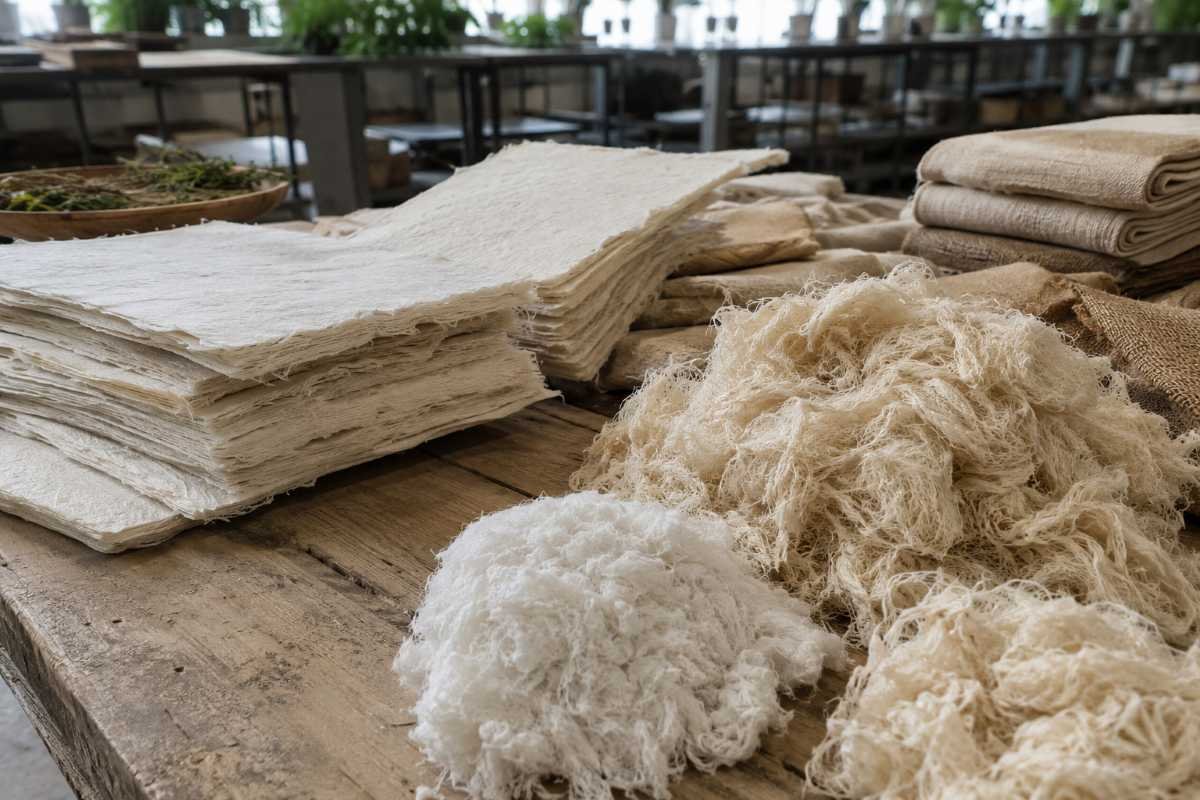
Cellulose is pulled from wood pulp — commonly beech, pine, or eucalyptus.
Chemicals turn the cellulose into a thick, viscous solution.
The solution is pushed through spinnerets into an acid bath, forming solid fiber.
Fibers are spun into yarn, then woven or knitted into fabric.
That "viscous solution" step is actually where the name viscose comes from — which brings us to the question most people are really asking.
Is Rayon the Same as Viscose?
Not quite — but the two terms are used interchangeably so often that the confusion is completely understandable.
Rayon is the umbrella category. Viscose is the most common type of rayon — so common that in everyday use, people say "rayon" and "viscose" to mean the same fabric. But rayon technically includes other regenerated-cellulose fibers too, like modal and lyocell, each made with a different process.
There's a labeling reason this gets confusing, too: under the FTC's own labeling rules, U.S. clothing tags are required to use the generic name "rayon," while the international ISO standard uses "viscose" for that same most-common type. So a garment can be labeled "rayon" in the U.S. and "viscose" in Europe while being the exact same fabric.
Types of Rayon Fabric
All three start from the same basic raw material — wood cellulose. The difference is in the chemical process used to turn that cellulose into fiber, which drives the differences in strength, softness, and environmental impact.
Viscose Rayon
The original and most common type. Soft, breathable, and inexpensive, but the least durable and the most chemically intensive to produce.
Modal
Made primarily from beech tree pulp, using a process that produces a stronger, more shrink-resistant fiber. Common in soft t-shirts and underwear.
Lyocell (Tencel™)
Made using a closed-loop process that recaptures and reuses most of the solvent — the most sustainable of the three, and stronger and more breathable than standard viscose.
Relative comparison based on typical processing characteristics, not lab-measured values.
What Is Rayon Fabric Used For?
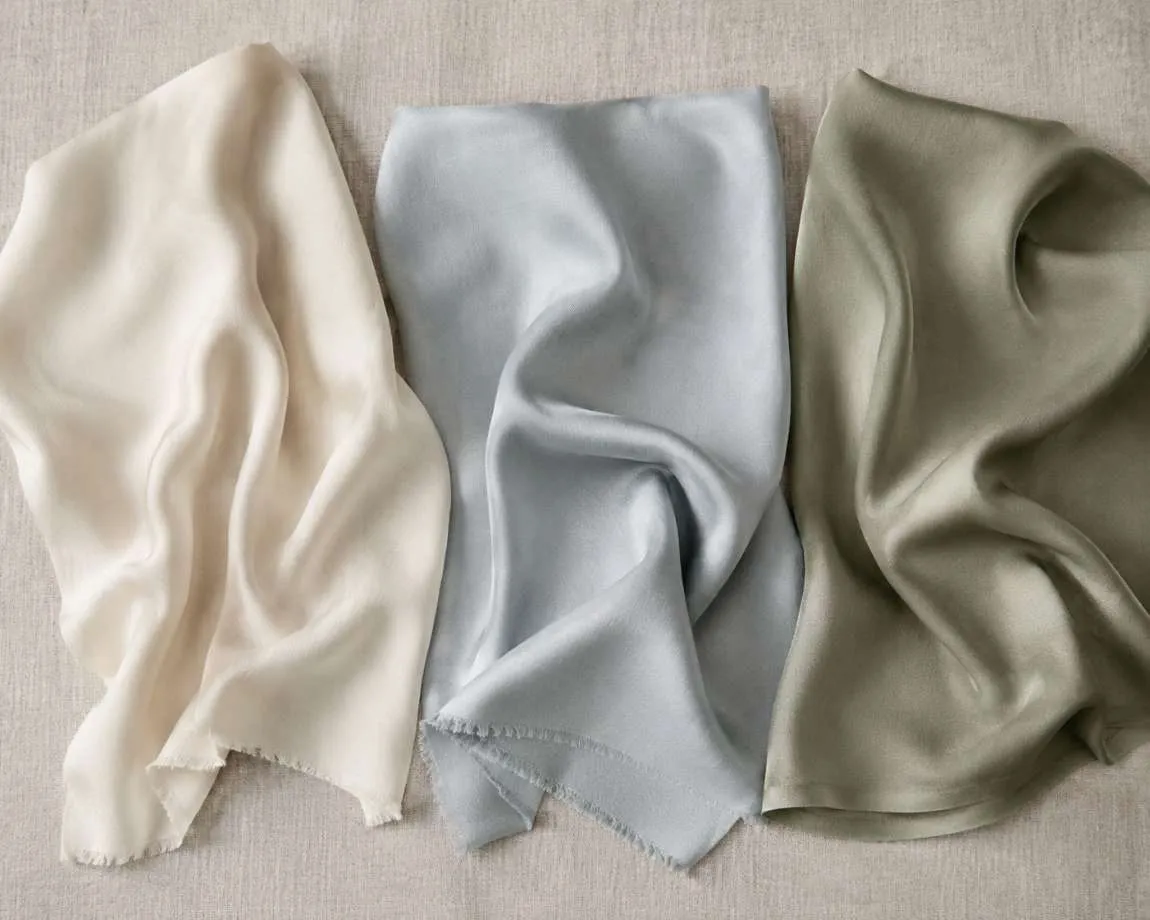
Rayon's defining qualities — a soft, silk-like hand, excellent drape, and high breathability — make it a go-to for:
It's less suited to structured garments or anything that needs to hold a sharp shape, since rayon on its own has little natural elasticity or recovery.
Rayon vs. Cotton vs. Polyester
| Property | Rayon | Cotton | Polyester |
|---|---|---|---|
| Origin | Semi-synthetic (wood pulp) | Natural (plant fiber) | Fully synthetic (petroleum) |
| Breathability | |||
| Drape | Excellent, fluid | Moderate | Stiffer, holds shape |
| Durability | |||
| Wrinkle Resistance | |||
| Cost | Low to moderate | Moderate | Low |
*Unless engineered for moisture-wicking.
None of these fabrics is a universal "best" choice — it depends entirely on what the garment needs to do. A brand building flowy, drapey pieces will reach for rayon; a brand building performance activewear will reach for polyester; a brand building durable everyday basics will often land on cotton or a cotton blend.
Caring for Rayon Fabric
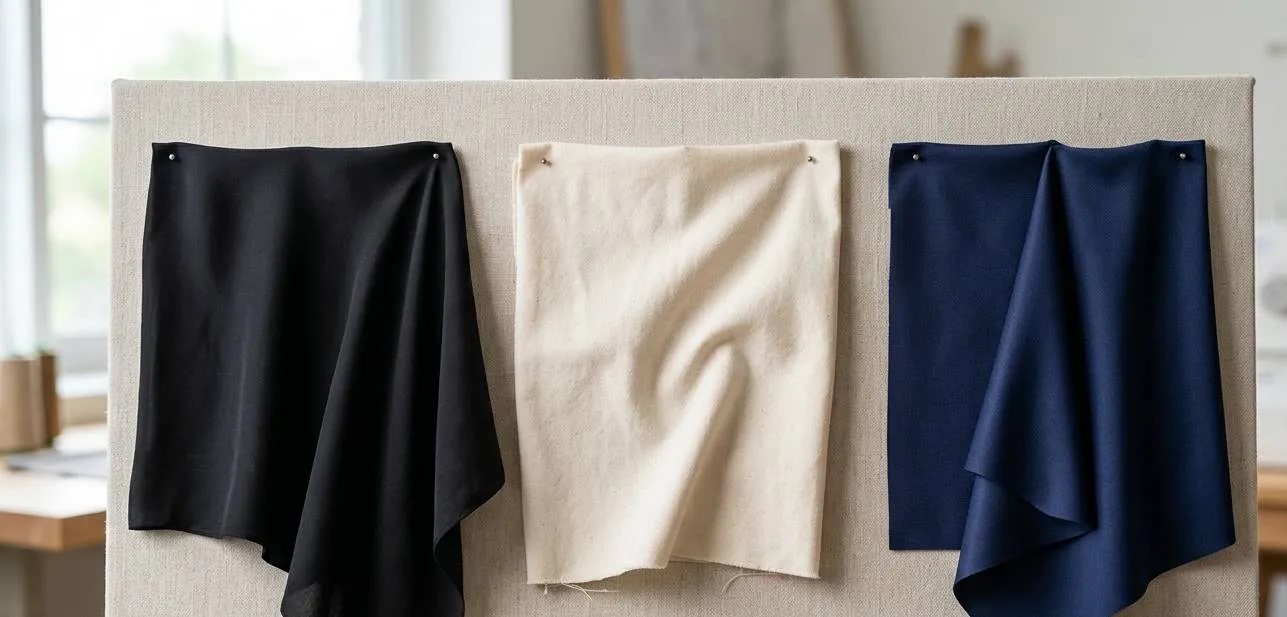
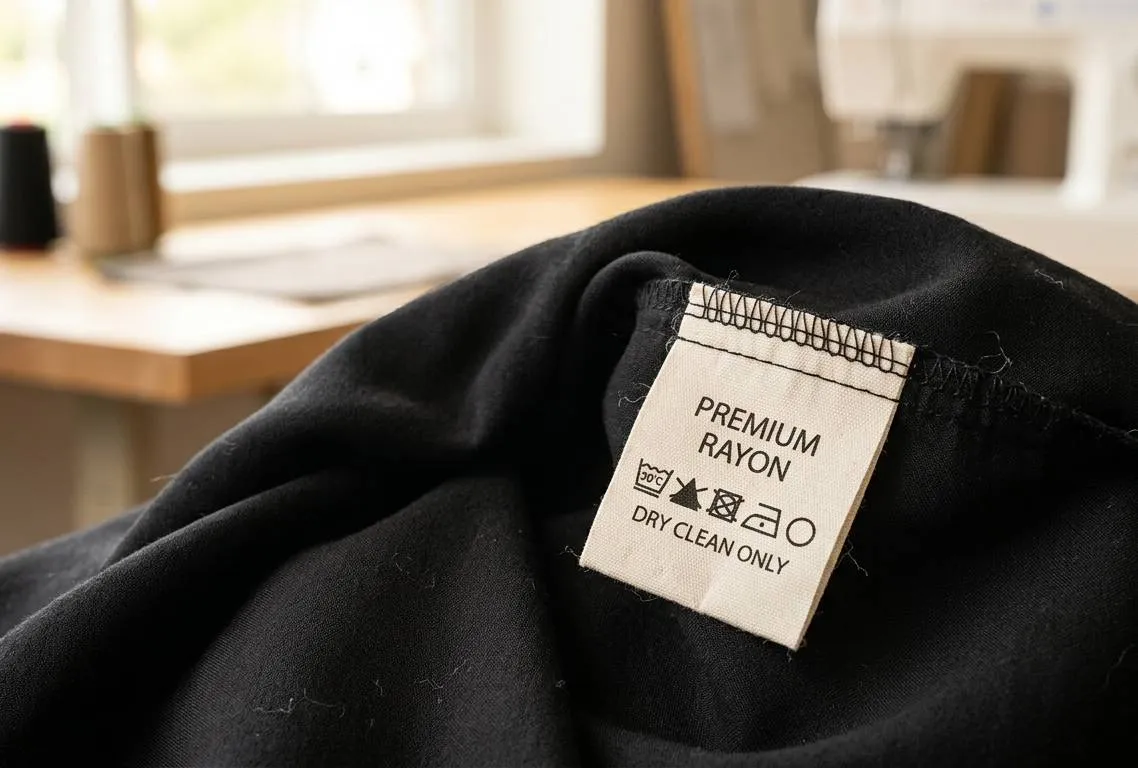
Rayon loses strength when wet, so a few care habits go a long way:
- Hand wash in cold water, or use your machine's gentlest delicate cycle
- Use a mild detergent — avoid harsh chemicals or bleach
- Never wring rayon fabric; press out water gently instead
- Air dry, ideally laid flat or hung, rather than machine drying
- Iron on a low setting if needed, ideally with a pressing cloth
Skipping these steps is the most common reason rayon garments shrink or lose their shape after a first wash.
Is Rayon Right for Your Brand?
If you're planning a collection that leans into softness and drape — flowy tees, lightweight dresses, or blend fabrics — rayon and its relatives (viscose, modal, lyocell) are worth discussing with your manufacturer early, since fabric choice affects everything downstream: pattern behavior, care labeling, and even which decoration methods will work well.
That's a conversation best had as part of your broader sourcing process — see our guide to working with a clothing manufacturer for what to bring to that conversation. Wearlets works with brands on custom t-shirts, custom sweatshirts, and full private label production — if you're weighing fabric options for an upcoming line, get in touch and we can walk through what fits your design and budget.
If sustainability is part of your sourcing criteria, ask about wood pulp sourcing and look for FSC certification as a starting point for that conversation.
You can also view all our manufacturing services to see the full range of what Wearlets produces.
Frequently Asked Questions
Is rayon a natural or synthetic fabric?
Is rayon the same as viscose?
Is rayon breathable?
Does rayon shrink?
What is rayon made of?
Is rayon good for hot weather?
Sourcing Rayon, Viscose, or Something Else?
Get in touch and we'll help you figure out what's right for your design.