 WEARLETS

What Is Linen Fibre? Origin, Properties and Uses Explained
Linen fibre starts in the flax field and ends as finished cloth. Here's what a brand should know before sourcing it for a next collection.
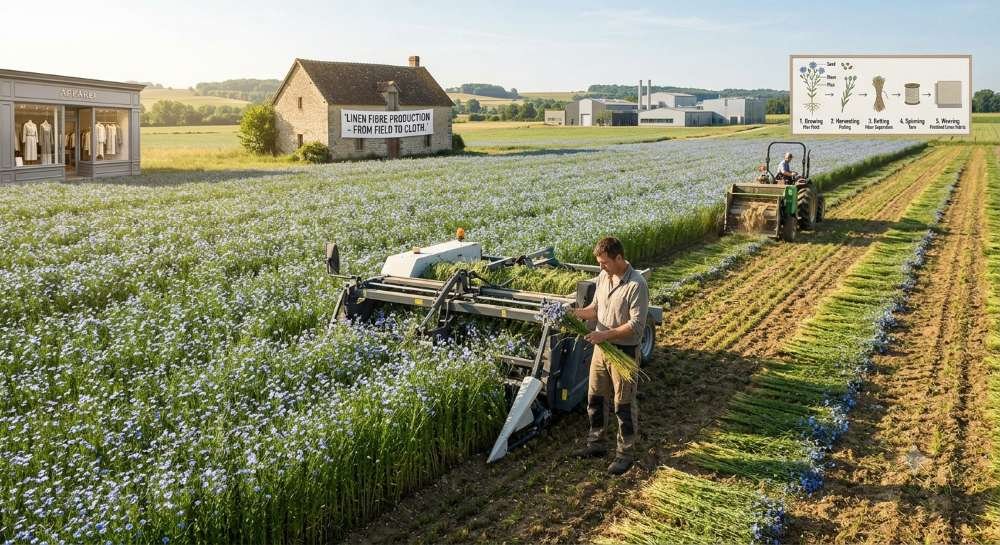
Linen fibre comes from one of the oldest cultivated plants on Earth. Yet most people only meet it as a finished bedsheet or shirt. Understanding this raw material explains why linen feels the way it does. It also explains why the fabric wrinkles easily and costs more than cotton. This guide covers where the fibre comes from, whether it counts as a natural material, and its core properties. It also walks through how a flax stalk becomes woven cloth, plus where the finished fabric typically ends up. Brand owners planning a linen collection will also find a short sourcing note near the end.
What Is Linen Fibre?
Linen fibre is the raw material behind linen fabric. It comes from the stem of the flax plant, not an animal coat or a seed pod. That single detail sets it apart from cotton at the source.
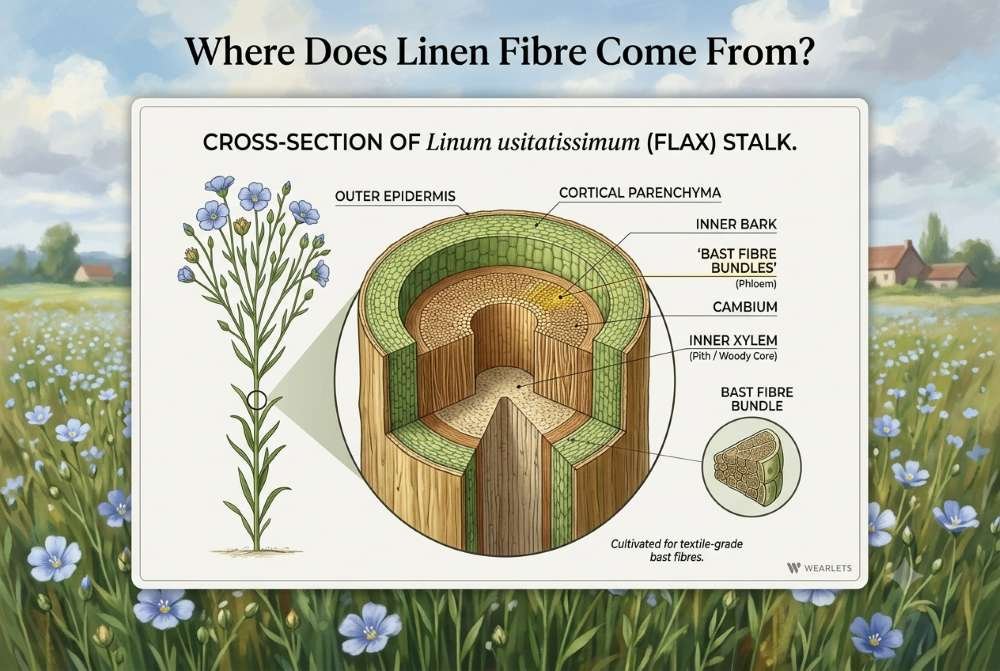
Botanists classify it as a bast fibre. That means it sits in the inner bark of the stalk, not on the surface. Manufacturers separate that layer from the woody core through a process we cover further down this page.
Once cleaned, spun, and woven, the same material takes on a new name: linen fabric rather than linen fibre. That switch trips up plenty of shoppers browsing our types of fabric guide. Ancient civilizations valued this fibre thousands of years before synthetic alternatives existed. It remains one of the few materials modern manufacturing has never fully replaced.
Where Does Linen Fibre Come From?
The Flax Plant
Linum usitatissimum is the scientific name for flax, an annual crop that grows to about waist height in one season. Farmers harvest it either for seeds that produce linseed oil, or for stem fibres that become textile linen. The two uses call for entirely different growing conditions. Belgium, France, and parts of Eastern Europe currently grow much of the world's textile-grade flax. Their climate and soil suit long, fine fibres best. Colder, damper regions tend to favor fibre quality over seed yield. That's part of why fashion-grade linen so often traces back to Western Europe.
From Stalk to Fibre
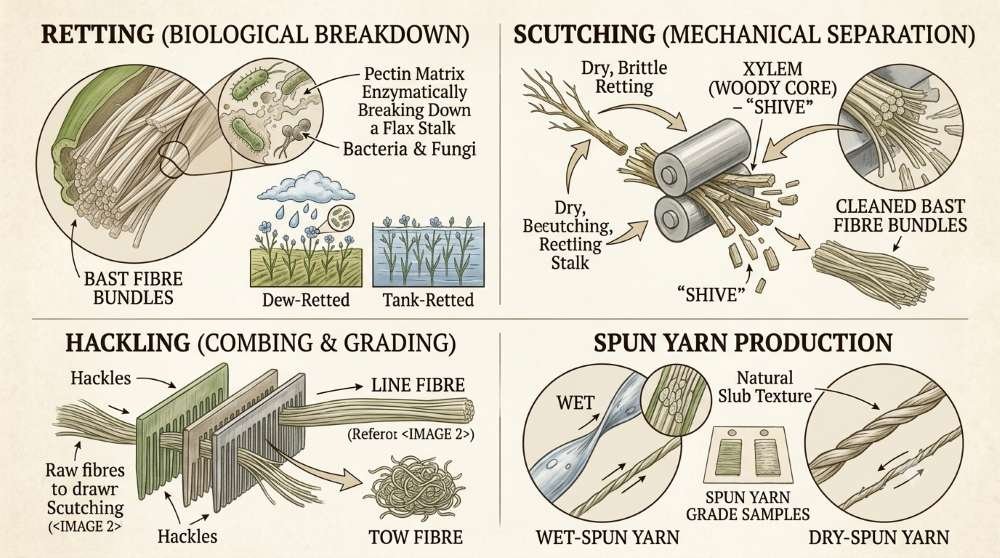
Inside every flax stalk, bundles of fibre run lengthwise between the outer bark and the woody core. Extracting them starts with a controlled decomposition step called retting. This process breaks down the pectin that binds the fibre to the rest of the plant. Water retting and dew retting are the two traditional methods, and each produces a slightly different fibre colour and texture. After retting, mechanical rollers crush the woody core so workers can separate it from the usable fibre.
Is Linen a Natural Fibre?
Yes — linen fibre comes entirely from plants, with no synthetic or animal component at any stage. Cellulose makes up the bulk of the fibre, the same structural compound found in cotton, bamboo, and wood pulp. That structure also makes linen fully biodegradable at the end of a garment's life, unlike polyester or nylon blends. It's worth repeating an earlier distinction. Flax describes the plant and its raw fibre, while linen refers to the finished yarn and fabric. Neither the plant nor the fabric contains any man-made fibre. So the honest answer to "is linen a natural fibre" stays a simple yes, at every stage of production.
Properties of Linen Fibre
Strength & Durability
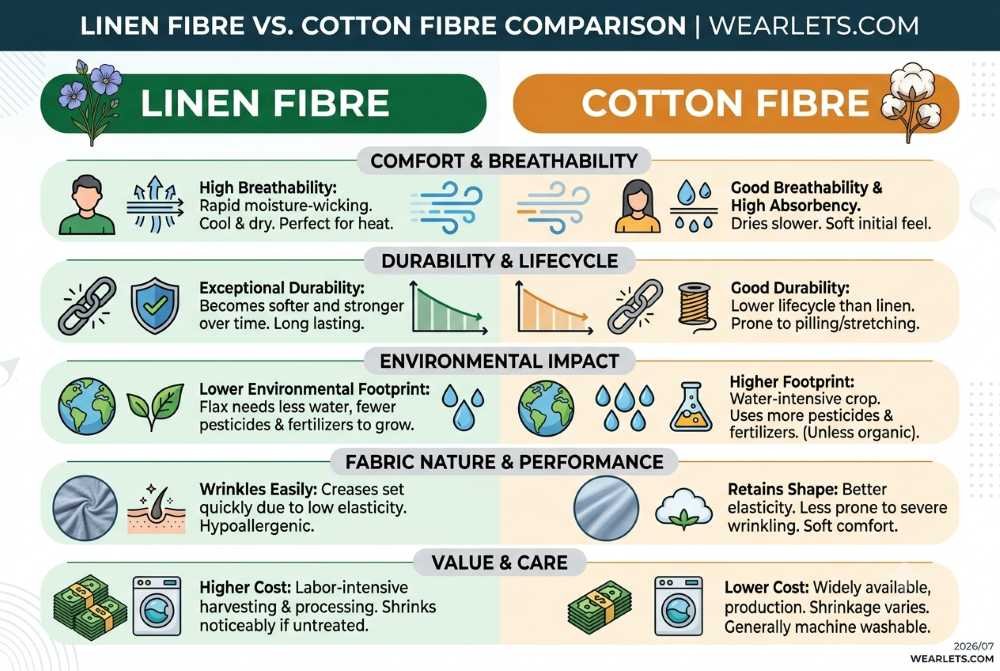
Individual linen fibres test up to three times stronger than a comparable cotton fibre, thanks to long, unbroken cellulose chains. That's part of why antique linen textiles still survive in museum collections. Fibres running 25–150mm produce smoother, less pill-prone yarn than shorter staples do.
Absorbency & Breathability
Moisture regain in linen sits around 11 to 12 percent, noticeably higher than cotton's typical rate. That open weave lets air move through the fabric quickly. It's exactly why linen became warm-weather clothing centuries ago.
Texture & Feel
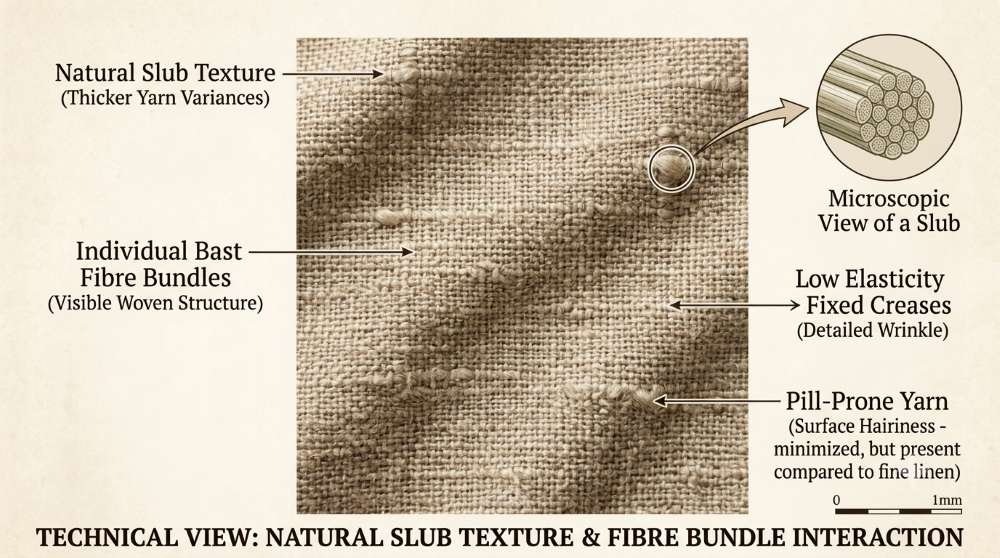
Untreated linen carries a stiff hand-feel that softens with repeated washing. Fine yarns turn smooth and almost silky, while coarser yarns keep more of flax's natural slubbed texture. Lower elasticity than cotton means creases form easily unless the fabric gets a special finish.
Advantages and Disadvantages of Linen Fibre
Advantages
- Exceptional breathability — moves air and moisture away from the body faster than most alternatives
- Outstanding durability — a well-made garment can outlast several cotton equivalents
- Lower environmental footprint — flax generally needs less water and fewer pesticides than cotton
- Hypoallergenic — a common choice for sensitive skin and even wound-care textiles
Disadvantages
- Wrinkles easily — flax's low elasticity lets creases set in almost as soon as you wear it
- Higher cost than cotton, since labour-intensive harvesting and processing add expense
- Shrinkage — untreated linen fabric can shrink noticeably after its first wash
- Limited stretch — garments need generous cuts rather than a snug, stretch-fit design
How Linen Fibre Is Made Into Fabric
Retting
Retting is the first real transformation after harvest, loosening fibre from the stalk's woody core through controlled moisture exposure. Farmers typically leave harvested flax in the field for dew retting. Natural moisture and microbes do the work over several weeks. Faster water retting, by contrast, submerges the stalks in tanks or rivers and finishes the job in days.
Scutching and Hackling
Scutching follows retting, using rollers or blades to knock the brittle woody core away from the softer fibre bundles. Hackling then combs the remaining fibre through progressively finer combs, splitting it into long "line" fibre and shorter "tow" fibre. Line fibre goes on to produce fine, high-end linen fabric. Tow fibre typically becomes coarser textiles, like rope or heavyweight cloth.
Spinning and Weaving
Spinning twists the cleaned fibre into continuous yarn, using either wet or dry methods depending on the desired fineness. Wet spinning produces smoother, finer yarn suited to apparel. Dry spinning creates a coarser thread, more often used in home textiles. Weaving then interlaces that yarn into fabric, completing the journey from raw stalk to finished cloth on the cutting table.
Common Uses of Linen Fibre
Apparel remains the single largest use of linen fibre today, covering everything from shirting to tailored trousers and summer dresses. Shirts, blouses, and lightweight blazers drive much of that demand, alongside a growing market for linen loungewear and resort wear. Blended linen, often mixed with cotton or viscose, shows up in dresses and trousers too. Brands use the blend to capture some of linen's texture without its full price tag or wrinkle profile.
Home textiles make up the next major category, including bed linens, table linens, and upholstery fabric. That naming still echoes linen's historical dominance in household cloth. Industrial applications round out the list. The fibre also reinforces composite materials and supports specialty paper production, including certain banknote papers. Brands sourcing linen for a new collection generally care most about the apparel-grade fibre this guide describes. Industrial variants matter far less.
FAQs About Linen Fibre
Is linen a plant fibre or an animal fibre?
Linen fibre comes entirely from the flax plant's stem, not from any animal, and contains no synthetic material.
What fibre does linen come from?
Linen fabric comes from flax fibre, extracted from the bast layer of the flax stalk.
Is linen a natural or synthetic fibre?
Linen is a natural cellulose fibre with no synthetic content, unlike polyester or nylon blends.
Why does linen wrinkle so easily?
Flax fibres have lower elasticity than cotton, so the fabric creases readily unless it gets a wrinkle-resistant finish.
Where does the best linen fibre come from?
Belgium, France, and Ireland generally produce the highest-quality textile-grade flax, thanks to favourable climate and soil conditions.
Is linen fibre a cellulose fibre?
Yes — flax fibre is almost entirely cellulose, the same plant-based compound found in cotton and bamboo fibre.
Is linen a staple or filament fibre?
Linen is a staple fibre. Workers harvest it in short, measurable lengths rather than spin it as one continuous filament, unlike silk.
Which plant fibre produces linen?
Flax is the only plant that produces genuine linen. Other bast fibres, like hemp or jute, create separate fabrics entirely.
Can ironing linen too hot damage the fibre?
Excessive heat can scorch or weaken linen fibre over repeated exposure. A moderate iron setting with light steam works best.
How is linen fibre different from cotton fibre?
Linen fibre comes from a plant stem rather than a seed pod. It's generally stronger, more absorbent, and less elastic than cotton.
Sourcing Linen Fibre for Your Next Collection
Brands that understand the fibre behind the fabric brief their manufacturer far more precisely. That precision runs right down to yarn weight and finish. Wearlets sources premium fabrics, including linen, as part of its private label apparel manufacturing service for startups and established labels.
Our types of fabric guide and our viscose breakdown are good next reads if your collection mixes fibres.
Ready to move from research to a sample?
Get a Free Quote →